Joseph Louis Taborsky – The “Mad Dog Killings”
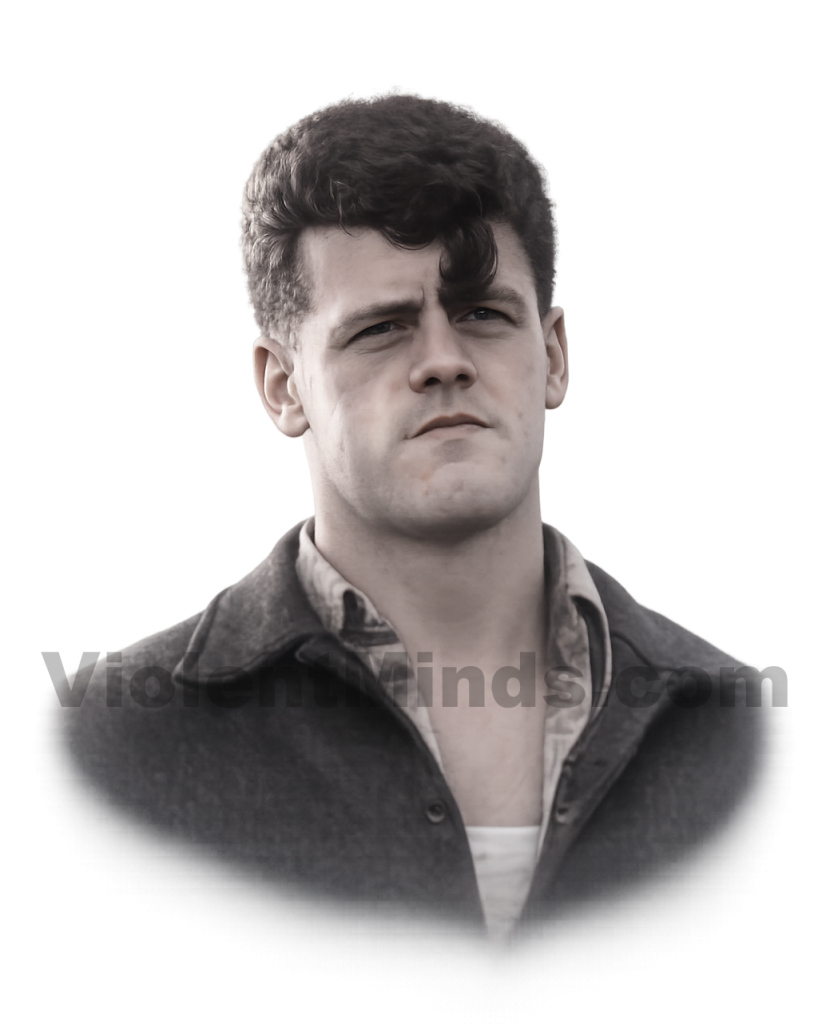
Introduction
Joseph Louis Taborsky (1924–1960) was a Connecticut robber and killer whose 1956–1957 “Mad Dog Killings” left at least six people dead and several more beaten or shot during holdups of liquor stores, a shoe store, and a pharmacy. Newspapers and police gave him the “Mad Dog” moniker because of the apparent savagery and randomness of the killings, which prompted statewide fear and changes to liquor‑store hours.
Early life and background
Taborsky grew up in Hartford and, by his late teens and early twenties, had already accumulated a long record for theft, robbery, and other property crimes. On March 23, 1950 – his 26th birthday – he and his younger brother Albert went out, in his words, to “get some money,” driving to a West Hartford liquor store where he robbed the owner, Louis Wolfson, and shot him at point‑blank range.
Wolfson died, and Joseph was convicted of first‑degree murder and sentenced to death, while Albert – who testified that Joseph pulled the trigger – received a life sentence. Joseph sat on Connecticut’s death row at Wethersfield, watching multiple electrocutions and, according to later interviews, “finding the Lord” but also developing a deep bitterness about the state’s intent to kill him.
In 1955, Albert suffered a severe mental breakdown, was transferred to Norwich State Hospital, and was eventually declared incurably insane, casting doubt on his reliability as the key witness. On that basis, Joseph’s conviction was overturned; at retrial he was acquitted, released from death row in October 1955, and publicly vowed to go straight, telling a reporter he wouldn’t “even get a parking ticket.”
Criminal history
Despite his vows, Taborsky returned quickly to robbery. Less than two years after release, he teamed up with Arthur “Meatball” Culombe, a fellow ex‑con, and began a run of pistol‑whippings, shootings, and holdups across central Connecticut. On November 11, 1956, they badly beat a Hartford hotel clerk during a robbery; a week later they pistol‑whipped a Hartford liquor‑business owner, and a week after that they did the same to a Rocky Hill package‑store proprietor.
These assaults set the stage for a series of murders in late 1956 and early 1957 in which victims were shot with little provocation, often in the head or chest at close range, for small amounts of money. By early 1957, Taborsky had evolved from a chronic robber into the state’s most feared, and most hunted, armed killer.
Spree killings
The “Mad Dog Killings” generally refer to a compressed series of robberies and murders between December 1956 and January 1957, layered on top of the November beatings.
- December 15, 1956 – Attempted murder and double killing: That day, Taborsky and Culombe first robbed and shot Nickola Leone, a New Britain gas‑station attendant, leaving him for dead; he survived as a key witness. Later the same day, they robbed a West Hartford liquor store and shot employees Edward Kurpiewski and Daniel Janowski in the back of the head, killing both.
- December 26, 1956 – Sam Cohn murder: Eleven days later, Taborsky shot and killed liquor‑store owner Sam Cohn in New Britain during another robbery, again for a modest cash take.
- January 5, 1957 – Speyer double murder: Taborsky entered a small East Hartford shoe store, asked for size‑12 shoes, and then pistol‑whipped the owner before shooting customers Bernard “Buster” Speyer and his wife Ruth in the head, killing them both. The brutality of the scene – customers executed over a trivial transaction – deepened public terror.
- January 26, 1957 – Rosenthal killing: Later that month, pharmacist Jack (John M.) Rosenthal was found dead in his New Britain drugstore, killed by a gunshot to the chest during yet another robbery.
- Non‑fatal Vinton attack: In between, in early January, Taborsky and Culombe robbed Mr. and Mrs. Vinton at their country store, beating and binding them; Taborsky ordered Culombe to kill Mrs. Vinton, but Culombe later claimed he fired into the floor instead and left her alive. The surviving Vintons’ description of two tall, dark‑haired men over six feet became crucial to the investigation.
Cumulatively, this spree left at least six people murdered (Kurpiewski, Janowski, Cohn, Bernard Speyer, Ruth Speyer, Rosenthal) and several others beaten or shot, often for total proceeds under $400.
System failure
The Taborsky case is a stark example of how weaknesses in evidence, mental‑health assessment, and parole decision‑making can collide.
- Overturned death sentence and release: Joseph’s original death sentence in the Wolfson case was vacated because the key witness – his brother Albert – became psychotically ill and was declared incurably insane. Without Albert’s reliable testimony, the state lacked a solid case, and Joseph was acquitted at retrial, despite his long record of robbery and violence.
- Risk underestimation: Upon release, officials and the public largely focused on the injustice of his earlier death‑row experience rather than the ongoing risk posed by a seasoned, embittered robber who had watched multiple executions and reportedly emerged more hardened.
- Limited supervision and gun access: After his release, there was no intensive supervision regime or modern risk assessment; he quickly re‑armed through a Hartford pawnbroker who sold Culombe seven pistols, at least three used in the spree, highlighting lax controls and little communication between parole, courts, and firearms regulation.
Once the killings began, the multi‑jurisdiction nature of the robberies (Hartford, New Britain, East Hartford, West Hartford) complicated pattern recognition, and only after ballistic links and survivor descriptions were coordinated did investigators narrow on Taborsky and Culombe.
Psychological profile
Defense and prosecution experts painted sharply different pictures of Taborsky’s psychology.
His attorneys argued that years on death row – watching the electric chair claim others while he contemplated his own execution – left him deeply traumatized and warped, contributing to a retributive motive. A defense psychiatrist testified that Taborsky told a prison doctor, “When I kill another human being, they didn’t think it was wrong when they wanted to kill me,” suggesting he saw his crimes as a twisted mirror of the state’s attempt to execute him.
That psychiatrist diagnosed Taborsky as psychotic, claiming he was unable to distinguish reality from fantasy and that his motive for killing robbery victims was to force the state to execute him – effectively, suicide by justice system. In this view, he was driven by a pathological mix of self‑destructiveness and revenge, not simple greed.
By contrast, prosecution psychiatrist Dr. Harold Bancroft rejected the psychosis explanation, arguing that Taborsky’s primary motive was financial gain and that he killed to eliminate witnesses, in part because his height and distinctive appearance made identification likely. Bancroft emphasized the consistent pattern – holdup, small cash take, close‑range shots – without the disorganization or delusional system typical of severe psychosis.
From a behavioral standpoint, Taborsky showed:
- Cold efficiency: Victims were often shot in the head or chest with little hesitation once money was secured, indicating instrumental killing rather than a prolonged sadistic ritual.
- Forensic awareness: He later told investigators he preferred shooting victims in the head because he mistakenly believed head shots would strip bullets of identifying marks, showing some (flawed) thinking about ballistics evidence.
- Indifference to low payoff: The entire spree netted under $400, suggesting that risk and moral cost were grossly disproportionate to financial gain, consistent with a mixture of antisocial traits, recklessness, and perhaps a latent death wish.
Taken together, his profile fits a chronically antisocial, highly dangerous offender whose experiences on death row likely intensified bitterness, fatalism, and a willingness to kill witnesses, but whose crimes remained organized, purposeful, and not clearly driven by psychotic delusion.
Aftermath and legacy
Police arrested Taborsky and Culombe on February 23, 1957, initially “on a hunch” for breach of the peace after an informant, Anthony Adinolfi, linked them to suspicious activity. Under interrogation, Culombe gave a detailed confession to eight holdups, insisting that Taborsky fired all the fatal shots while he mostly pistol‑whipped victims and drove.
Culombe’s “uncanny memory” of locations allowed investigators to recover discarded weapons and tie ballistics across crime scenes, cementing the case against both men. A Hartford pawnbroker was later arrested for selling multiple pistols to Culombe, further closing the loop on the weapons supply.
In 1958, Taborsky was convicted of several of the “Mad Dog” murders and sentenced to death; Culombe received life sentences. The Connecticut Supreme Court upheld both death sentences in March 1960; Taborsky waived further appeals and declined to seek clemency, effectively volunteering for execution.
On May 17, 1960, shortly after 10:30 p.m., Joseph “Mad Dog” Taborsky was executed in Connecticut’s electric chair at Wethersfield prison. His case remains notorious in Connecticut history as a catalyst for changes in package‑store hours and as a cautionary tale about releasing a violent offender from death row without robust risk management, as well as a rare example of a man condemned twice for separate murder series and ultimately put to death.
FOR READERS FASCINATED BY CRIMINAL MINDS
From the creators of Violent Minds comes Murder.net - a psychological cyber-thriller about control, fear, and obsession, where a killer streams his murders online to paying subscribers. How far would you go to stop a monster?
Get The Book
