The Story of Tyler Robinson: The Man Accused of Killing Charlie Kirk
Introduction
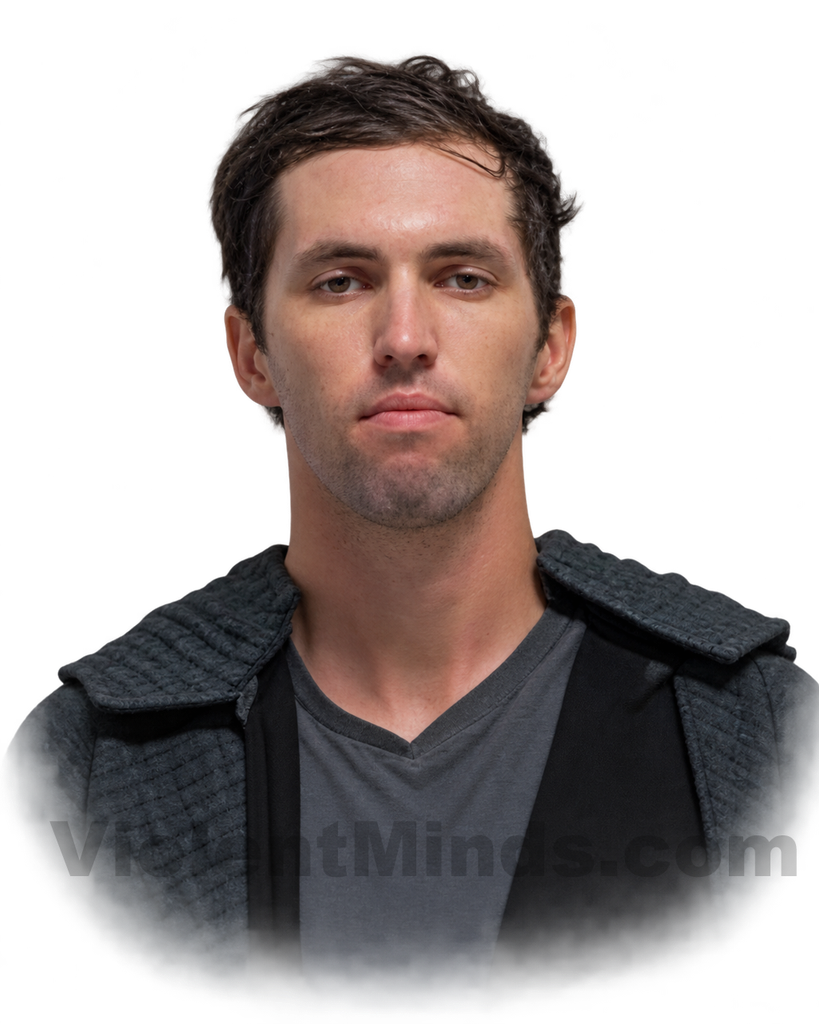
Tyler James Robinson is the Utah man charged with killing conservative political activist Charlie Kirk during a public event at Utah Valley University on September 10, 2025. Prosecutors allege that Robinson fired from a rooftop overlooking the gathering, fled the area, and later admitted responsibility in messages to his roommate and romantic partner.
Robinson surrendered after members of his family recognized him in images released during the investigation. Authorities charged him with aggravated murder and six other offenses, and prosecutors announced that they would seek the death penalty.
In September 2026, a judge ruled that the prosecution had presented sufficient evidence for the case to proceed to trial. Robinson pleaded not guilty to all charges. As of October 16, 2026, he had not been convicted, and a further hearing was scheduled for October 23.
The case raises questions about targeted political violence, the interpretation of digital communications, and the point at which a personal grievance may become a justification for harming someone else. Those questions must be considered alongside the unresolved legal proceedings and the defense’s challenges to the evidence.
Background and Family Life
A Young Adult in Utah
Robinson was 22 when Kirk was killed and 23 by the time the court ordered him to stand trial. According to accounts his mother gave investigators, he was studying at Dixie Technical College in southern Utah.
His family became an important part of the investigation. His parents spoke with authorities about his recent political views and helped persuade him to surrender after recognizing similarities between him and the person shown in surveillance images.
The publicly reported evidence provides more information about Robinson’s circumstances around the time of the shooting than about his childhood development. It does not establish a history of trauma, a psychiatric diagnosis, or a developmental explanation for the alleged attack.
Reported Changes in Political Views
Charging documents describe Robinson’s mother telling investigators that he had become more politically engaged and more left-leaning during the preceding year. She said he had become more supportive of gay and transgender rights and that his views differed from those of his father.
These statements describe a family’s account of changing beliefs. Political disagreement, support for LGBTQ rights, and conflict with relatives are not evidence of mental illness or a disposition toward violence. Their relevance to the case comes from the prosecution’s allegation that Robinson selected Kirk because of his political expression.
His Roommate and the Digital Communications
Robinson shared a home with a roommate whom charging documents also describe as his romantic partner. Communications between them became central to the prosecution’s case after the roommate provided information to investigators.
According to prosecutors, Robinson directed the roommate to look beneath his keyboard. A note allegedly found there stated, “I had the opportunity to take out Charlie Kirk and I’m going to take it.”
Authorities also described messages in which Robinson allegedly acknowledged responsibility, discussed the firearm, and asked for messages to be deleted. Those communications helped support the murder charge and additional allegations involving obstruction and witness tampering.
The roommate’s gender identity became a prominent feature of some coverage. It should not be treated as an explanation for the killing. The evidentiary issues concern the communications, their authenticity and context, and what they establish about Robinson’s alleged conduct—not the identity of his partner.
Charlie Kirk and the Campus Event
A Prominent Political Figure
Charlie Kirk, 31, was a conservative activist and a leading figure in Turning Point USA. His campus appearances involved discussion and debate with students and other attendees.
On September 10, 2025, he appeared at Utah Valley University in Orem. A large crowd gathered for the outdoor event. Kirk was fatally shot while addressing the audience.
A Public Killing
The shooting occurred in front of spectators, including children, and prompted an extensive search for the attacker. Prosecutors later cited the public setting and the allegation that Kirk was selected because of his political expression as important features of the case.
Regardless of disagreement over Kirk’s views, his killing was an act of violence against a person participating in a public political event. His family, colleagues, and the people who witnessed the shooting were left with consequences extending far beyond the criminal proceedings.
The Shooting and Investigation
The Alleged Rooftop Attack
Prosecutors allege that Robinson accessed a rooftop overlooking the event and fired the shot that killed Kirk. Investigators used surveillance footage to reconstruct the suspected attacker’s movements before and after the shooting.
The prosecution’s account describes preparation, movement to an elevated position, and an escape from the campus area. These remain allegations to be tested at trial rather than a final jury determination of Robinson’s actions.
The Recovered Rifle
Authorities recovered a rifle and a towel in a wooded area near the university. They identified the weapon as the one allegedly used in the shooting and pursued forensic testing of the firearm, ammunition, and associated items.
At the preliminary hearing, a forensic biologist testified that testing of several samples supported Robinson as the primary contributor to DNA recovered from relevant evidence. The defense questioned the reliability and interpretation of the DNA findings.
Forensic testimony is not a substitute for the complete case. Its significance depends on where material was recovered, what the testing can establish, and how it fits with other evidence. The defense retains the right to challenge those conclusions at trial.
Inscriptions on Ammunition
Investigators reported finding inscriptions on ammunition associated with the rifle. The messages included political language, an antifascist song reference, and internet-style jokes.
The inscriptions attracted extensive speculation about ideology and online influences. Their evidentiary value must be assessed in context. A slogan or meme does not, by itself, establish organizational membership, a psychological diagnosis, or the full motive for an attack.
Recognition and Surrender
His Parents Recognize the Images
According to charging documents, Robinson’s parents recognized him in images released during the search. His mother showed the images to his father, who agreed that the person resembled their son.
Authorities allege that Robinson subsequently discussed the killing with his parents. The documents attribute statements to him that Kirk spread hate and that there was too much evil.
A Family-Assisted Surrender
Reporting describes his parents seeking help from a family friend who was a retired law-enforcement officer. They helped persuade Robinson to surrender roughly a day after the shooting.
Authorities also reported that he had spoken about killing himself. That account describes an acute crisis during the surrender process. It does not establish a specific psychiatric condition or independently resolve the allegations against him.
Charges and the Prosecution’s Case
Seven Criminal Counts
Robinson was charged with aggravated murder, felony discharge of a firearm causing serious bodily injury, two counts of obstruction of justice, two counts of witness tampering, and committing a violent offense in the presence of a child.
Utah County Attorney Jeff Gray announced that prosecutors would seek the death penalty. The aggravated-murder allegation includes the claim that Kirk was intentionally selected because of his political expression.
The Alleged Explanation
One message attributed to Robinson stated, “I had enough of his hatred. Some hate can’t be negotiated out.” Prosecutors presented that language as evidence of hostility toward Kirk and a politically motivated decision to kill him.
The reported messages are significant, but an allegation in a charging document is not equivalent to a conviction. Their authorship, context, admissibility, and relationship to the other evidence remain matters for the proceedings.
The Preliminary Hearing and Defense Challenges
Evidence Presented in 2026
During the preliminary hearing in 2026, prosecutors presented surveillance footage, forensic testimony, communications, and witness accounts. The purpose was to establish probable cause for the charges to proceed—not to obtain a final finding of guilt.
The defense questioned the reliability of forensic evidence and challenged the prosecution’s effort to proceed on a capital charge. Robinson did not testify at the hearing. A defendant’s decision not to testify is not evidence of guilt.
The September 1 Ruling
On September 1, 2026, Judge Tony Graf ruled that prosecutors had presented sufficient evidence for Robinson to stand trial on all seven charges, including aggravated murder. The ruling allowed the death-penalty prosecution to proceed.
Robinson’s attorney entered not-guilty pleas on his behalf. The ruling established that the case could move forward; it did not determine guilt beyond a reasonable doubt.
Current Case Status
As of October 16, 2026, Robinson was awaiting trial and remained presumed innocent. A hearing was scheduled for October 23 to address the case timetable.
His attorneys had also asked the court to exclude cameras from that particular hearing, arguing that broadcast discussions of preparation and scheduling could interfere with candid exchanges and affect the fairness of the proceedings. Such litigation concerns trial administration and constitutional rights; it should not be interpreted as evidence of guilt or a personality trait.
Psychological Profile: Grievance, Moral Justification, and Targeted Violence
Any psychological interpretation must remain provisional because Robinson has not been convicted and the communications attributed to him are disputed evidence rather than a completed clinical record. If established, the alleged note and messages would support examining a grievance-based pathway: identifying a person as a source of harm, concentrating hostility on that person, and deciding that violence is an acceptable response.
The statement that “some hate can’t be negotiated out” is particularly relevant to that interpretation. It appears to frame violence not simply as revenge but as a necessary answer to a problem the speaker considers beyond discussion. Psychologically, that can function as moral justification: redefining harm as a corrective act. This is an interpretation of the alleged language, not confirmation of Robinson’s complete motive.
The note about having an opportunity to “take out” Kirk, together with the alleged rooftop preparation, would also suggest a progression from hostile belief toward a specific target and intended action. Political disagreement alone does not explain that progression. The important issue is the alleged decision to treat another person’s death as a legitimate solution to disagreement.
The messages concerning deletion of communications and the firearm may indicate awareness of consequences and efforts at concealment if their authorship and meaning are established. They do not reveal the whole of his emotional state, and expressions of distress after an alleged attack cannot automatically be classified as remorse, fear of punishment, or concern for a particular person.
The record reviewed here does not establish psychosis, psychopathy, a personality disorder, or a specific process of online radicalization. His reported politics, relationship, partner’s gender identity, and use of internet humor are not diagnoses or sufficient explanations for violence. The strongest provisional formulation concerns the alleged combination of grievance, moral justification, preparation, and concealment—not a clinical label or a generalization about an ideological community.
Public Impact and Responsible Reporting
Political Violence and Public Debate
Kirk’s killing generated national attention because of his political prominence and the public setting. It also created an environment in which claims about the accused, his relationships, and possible affiliations spread before they had been tested.
A responsible account separates evidence attributed to investigators from speculation. It should not infer a broader conspiracy from a joke, turn a partner’s identity into a motive, or assume that a change in political beliefs makes violence predictable.
The Victim and the Witnesses
Criminal proceedings focus on the accused, but Kirk’s death also affected his family, colleagues, and the people who witnessed the shooting. The public nature of the attack does not diminish the personal loss behind the political debate.
Those consequences deserve attention without turning the case into a spectacle or treating the accused person’s notoriety as the central achievement of the event.
Conclusion
Tyler Robinson is charged with aggravated murder and six other offenses in the September 2025 killing of Charlie Kirk at Utah Valley University. Prosecutors allege a targeted, politically motivated shooting supported by surveillance, forensic evidence, communications, and witness accounts.
A judge ordered the case to proceed to trial in September 2026, and Robinson pleaded not guilty. As of October 16, he had not been convicted. The next scheduled hearing was October 23.
The psychological questions concern how an alleged grievance became a proposed justification for violence and whether the reported communications establish that progression. Those questions can be examined carefully while preserving the presumption of innocence and allowing the evidence to be tested in court.
Who is Tyler Robinson? | Vinnie Politan Investigates
FOR READERS FASCINATED BY CRIMINAL MINDS
From the creators of Violent Minds comes Murder.net - a psychological cyber-thriller about control, fear, and obsession, where a killer streams his murders online to paying subscribers. How far would you go to stop a monster?
Get The Book
