The Complete Story of Richard Beasley: The Craigslist Killer
Introduction
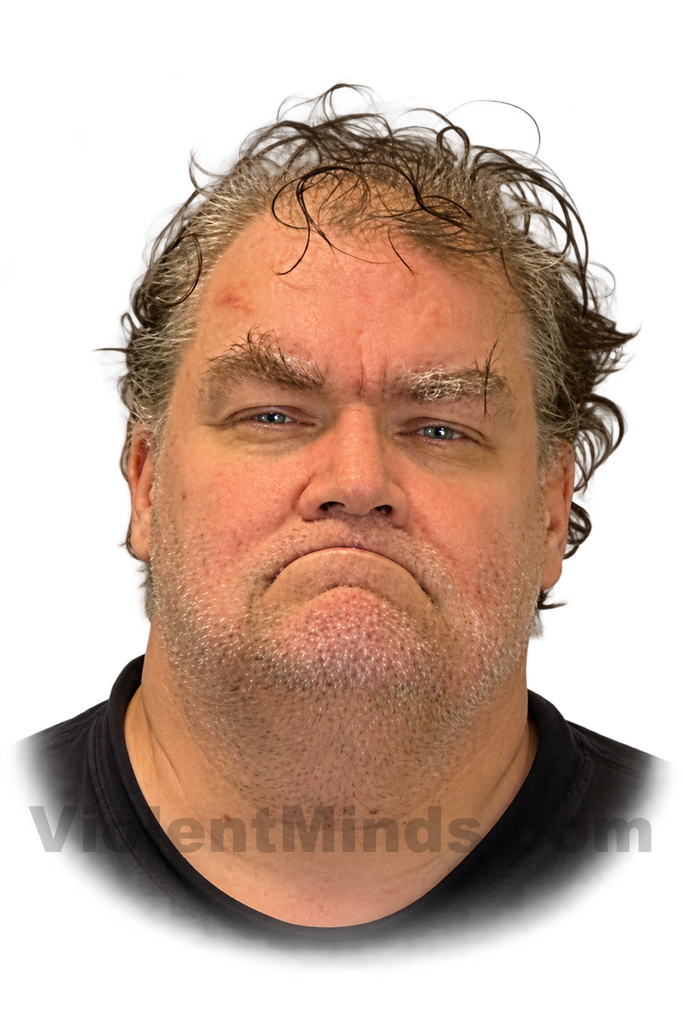
Richard James Beasley is an American serial killer who used fake Craigslist job ads to lure struggling men to their deaths in Ohio in 2011. Posing as a man hiring a caretaker for a 688-acre cattle farm, he promised $300 a week, a trailer to live in, and a fresh start. The farm did not exist. With the help of a 16-year-old boy he mentored, Beasley shot his victims, buried them in shallow graves, and took their trucks, belongings, and in one case their identity.
Between August and November 2011, Beasley murdered three men: Ralph Geiger, David Pauley, and Timothy Kern. A fourth man, Scott Davis, was shot in the arm but escaped into the woods and hid for seven hours. His survival exposed the scheme within days.
Beasley is often confused with Philip Markoff, the Boston medical student who was also called the “Craigslist Killer” after a 2009 hotel murder. The two cases are unrelated. Markoff targeted women who advertised online and died in jail before trial. Beasley targeted men looking for work, was convicted of three aggravated murders, and has been on Ohio’s death row since 2013.
Early Life and Family Background
A Difficult Start
Richard James Beasley was born on June 15, 1959, in Washington, D.C. His mother, Carol, became pregnant with him at 16. His father was married to someone else at the time, so Carol moved to Washington, where Richard was born. She married his father when she was 17, but he was never around and provided no support. She divorced him when Richard was about a year and a half old.
The family settled in Akron, Ohio, where Beasley grew up. When he was nearly two, his mother met Jim Beasley, whom she later married. She described her second husband as a mean drunk, a gambler, and a jealous man who physically abused both her and her son. Everyone in the house, including Richard’s two younger half-sisters, was afraid of him and learned to lie to avoid setting him off.
Childhood Trauma
Beasley was a hyperactive child and was prescribed Ritalin in the fourth grade. Between the ages of five and seven, he spent summers with his grandparents in West Virginia, the one relationship in his childhood that the courts later described as healthy. His mother testified that she had only recently learned that he had been sexually abused by neighborhood boys when he was young.
As a boy, Beasley attended The Chapel, a large church in Akron, with his family. A pastor there later recalled congregants remembering him in cowboy boots and a big belt buckle, unusual clothing for Akron at the time. He graduated from Buchtel High School in 1976, where his mother worked as a secretary, and took trade-school courses to become a machinist. He later married and had a daughter, but the marriage ended in divorce.
A Life of Crime
Prison in Texas and Federal Custody
Beasley spent roughly 15 of the 30 years before his arrest in prison. In Texas, he was arrested and convicted for crimes including burglary and unauthorized use of a motor vehicle, and he served about four years in a Texas prison before being paroled. He later served time in federal prison on a weapons-possession charge. He returned to Ohio in 2004 as a Texas parolee.
“Chaplain Rich”
Back in Akron, Beasley presented himself as a street preacher and an unpaid chaplain. His mother said he fed the needy and counseled people in trouble, and Beasley himself later wrote that he had helped feed, house, and counsel drunks, drug addicts, the mentally ill, and families in crisis. Two Akron churches he was associated with, including The Chapel, denied that he had ever been sanctioned as a chaplain or had any role in their youth activities.
It was through this church world that Beasley met Brogan Rafferty, a boy from nearby Stow whose parents had divorced. Rafferty’s mother said her son had looked up to “Chaplain Rich Beasley” for about ten years. Beasley’s mother said he tried to get the boy interested in history, and that the two went fishing, played video games, and delivered food to the needy together.
Drugs, Prostitution, and an Informant’s Secret
Behind the ministry, Beasley was deep in Akron’s underworld. Starting in August 2010, he worked for several months as a confidential informant for the Akron police gang unit, passing along information about local motorcycle gangs. In January 2011, he told a detective he was worried his contacts with police were becoming known.
At the same time, he was committing crimes of his own. In November 2010, he sold OxyContin to an undercover detective. In December 2010, Akron police charged him with 15 prostitution-related counts, accusing him of recruiting, managing, and profiting from 14 prostitutes, one of whom was a 17-year-old he knew was underage.
The Release That Should Not Have Happened
Beasley was held in the Summit County Jail until July 2011, when a judge reduced his bond and he was released on July 12. Texas parole authorities had placed a no-bond warrant and detainer on him, and they later said he should never have been let out. Ohio officials said the Texas hold had been lifted while his drug case was pending. Once free, Beasley never returned to court for his later hearings.
Beasley later testified that a Texas parole officer had contacted him in January 2011 and “insinuated heavily” that he would be sent back to Texas. To avoid that, he said, he decided to become someone else. In the spring of 2011, he asked a friend, Joyce Grebelsky, to start calling him “Ralph Geiger” because he wanted to be a different person and did not want to go back to jail.
The Murders: August to November 2011
Ralph Geiger
Ralph Geiger, 56, had once run a successful construction business. By February 2011, he was homeless and staying at a shelter in downtown Akron. In early August, he told shelter staff and a friend that he had found a job on a farm in southern Ohio and warned that he would not have cellphone coverage there. On August 8, 2011, he checked into a Best Western hotel in Caldwell, in Noble County. Three adults were registered to the room. His friend never heard from him again.
Brogan Rafferty later testified that he watched Beasley shoot Geiger in the back of the head in the woods near Caldwell. Geiger was buried in a shallow grave. Within weeks, Beasley was living as Ralph Geiger. Under Geiger’s name, he applied for jobs at a trucking company and another business, opened a bank account, rented rooms, and sought prescription painkillers from a community health clinic.
The Fake Farm Job
In October 2011, Beasley began posting Craigslist ads for a caretaker on a 688-acre cattle farm near Caldwell. The job paid $300 a week, came with a two-bedroom trailer, and let the worker bring all of his belongings. More than 100 people reportedly responded. Using the email address [email protected] and names like “Jack” and “Richard Bogner,” Beasley interviewed candidates at the Chapel Hill Mall food court in Akron and at restaurants near Caldwell. To explain why applicants could not drive straight to the farm, he told them a nearby road had been blocked by a landslide.
The interviews were not about hiring. They were about choosing victims. The applicants who survived were the ones who did not fit. Beasley dropped one man after he said he planned to bring his pistol. “I’m the only one with a gun,” Beasley told him. The same man said he could not find the property on the county auditor’s website and later told Beasley, “What if somebody is trying to get my vehicles before I come down there, and then when I get down there, shoot me and take my stuff.” Beasley replied, “You shouldn’t have said that,” and withdrew the offer. He ended another interview abruptly when the applicant mentioned martial arts training and security work. He never called back a third man who mentioned his fiancée.
David Pauley
David Pauley, 51, of Norfolk, Virginia, had been out of work for about two years when he answered the ad on October 9, 2011. He told his twin sister, Debra Bruce, about the cattle farm job and later said he had been hired. On October 22, he left Norfolk in his blue pickup truck, pulling a U-Haul trailer with everything he owned. Bruce spoke to him twice that day. She never heard from him again.
Pauley met Beasley and Rafferty on October 23 and followed them to the woods in Noble County, where he was shot once in the head. That same afternoon, Beasley called a friend, Don Walters, and said he had won a storage unit auction, like the ones on the TV show Storage Wars, that came with a truck and a U-Haul full of items. He arrived at Walters’s home driving Pauley’s truck and towing Pauley’s trailer. Rafferty, whom he introduced as his nephew, followed in another car. They unloaded Pauley’s possessions into Walters’s garage, and Beasley took what he wanted, including a laptop. He left behind Pauley’s Christmas decorations as payment.
Scott Davis: The Survivor
Scott Davis, 48, was a self-employed landscaper in South Carolina who wanted to move back to Ohio to be closer to his family. He answered the ad on October 9, 2011. “Jack” replied on October 17, asking for a copy of his driver’s license for a “background check” and whether he owned a truck or tools. After more emails, Davis was told he had the job. He packed his belongings into a trailer and drove north.
On November 6, Davis met “Jack” and his “nephew” for breakfast at a Shoney’s in Marietta. Afterward, the three drove toward the supposed farm. About 15 minutes in, “Jack” told the young man, “Drop me off where we got that deer last week.” Beasley led Davis into the woods beside a creek, then suddenly said, “Forget this, let’s turn around and take the roadway.”
As Davis turned, he heard a click and a curse word. He spun around to see Beasley raising a gun. Davis pushed the weapon aside and was shot in the right elbow. He ran as Beasley kept firing. “I was worried about bleeding to death,” Davis later testified. He hid in the woods for about seven hours until dark, then walked to a house, pale and shaking, his arm and pant leg soaked in blood. As the homeowner called 911, Davis said, “I knew I was in trouble when I heard the click.”
That night, Beasley returned to the Akron home where he was renting a room and told his landlady he had been “shot at” during a storage-unit deal gone wrong. He told different versions of the story to different friends. In one, he knocked the gun out of the attacker’s hand. In another, he cut the man’s arm with a Sawzall.
Timothy Kern
Even after Davis escaped, Beasley kept going. Timothy Kern, 47, of Massillon, was a divorced father of three sons. He worked part-time at a gas station and was living in his car or with a friend, but he still visited his boys every day. He answered the farm ad on October 10, 2011. On November 9, his son Nicholas drove him to a job interview at a Waffle House off Interstate 77, where security cameras recorded Kern meeting a man who resembled Beasley.
Kern told his son he had gotten the job. The night before he left, his ex-wife notarized a title transfer for his Buick because he said he had to put the car in his employer’s name. Kern left on November 13 and was never seen again by his family. He was shot five times in the head and buried in a shallow grave in a wooded area near a vacant shopping mall in Summit County. Beasley later asked Walters to scrap Kern’s Buick under Walters’s own name.
The Investigation and Arrest
A Sheriff’s Doubts
Noble County Sheriff Stephen Hannum responded to the 911 call the night Davis was shot. At first, he did not believe Davis’s story. He knew of no 688-acre cattle farm in the county. But he did find the rockslide and heavy equipment Davis described, and investigators located Davis’s truck and trailer where Davis said he had left them.
The Graves in the Woods
On November 14, FBI agents and local officers searched the woods where Davis had been shot. About 175 feet from the road, they found an empty, hand-dug hole about 80 inches long and two feet deep. An agent’s first thought was that it was a grave, and prosecutors argued it had been dug for Davis. The next day, search dogs led investigators to David Pauley’s body. On November 25, searchers found Ralph Geiger’s body in another shallow grave roughly 80 feet away. The same day, a cadaver dog located Timothy Kern’s body near the Summit County mall.
Arrest on Gridley Avenue
Investigators traced a prepaid phone number to an area of Akron and independently tracked Beasley through his Craigslist messages with Penny Kaufman, who had rented him a room after answering his ad, “Quiet man needs quiet space to live.” Beasley and Rafferty were both arrested on November 16, 2011. In Beasley’s bedroom, agents found David Pauley’s NASCAR trading cards, a cooler holding his model train and train books, mail addressed to “Ralph Geiger,” and pill bottles in Geiger’s name. In Rafferty’s bedroom, they found a briefcase holding a sawed-off shotgun and a .22 pistol.
When he was arrested, Beasley had already posted a new ad for a handyman on a secluded property in Ohio. The Ohio Supreme Court later wrote that he had been preparing to lure more victims.
The Letter From Jail
Beasley was first held on his earlier drug and prostitution charges on a $1 million bond. From the Summit County Jail, he sent Joyce Grebelsky a letter signed under the false name “Chris Star,” along with a hand-drawn map. It told her to go to the Gridley Avenue house at night, dig up two laptops hidden under leaves, “destroy them, then take them apart and trash them,” and destroy the contents of a wallet hidden nearby. She was to write back using the code words “sunny day” if it went well and “rainy day” if the computers were gone. “It is very important this gets done,” he wrote. “I mean, critical.”
Grebelsky turned the letter over to authorities. FBI agents found Ralph Geiger’s driver’s license, Social Security card, and birth certificate in the hidden wallet. One of the laptops contained documents belonging to David Pauley’s brother. Another had been used to access the email account behind the fake farm ads.
Legal Proceedings
The Trial of Brogan Rafferty
Rafferty, 16 at the time of the killings, was tried as an adult but was not eligible for the death penalty because of his age. His trial began in October 2012, with Scott Davis as the first witness. Jurors heard Rafferty’s recorded statements to police, in which he said he had been “ordered” to dig a grave and that Beasley had reminded him he knew where Rafferty’s mother and sister lived. Rafferty testified that after watching Beasley shoot Geiger, he was terrified of the man he had seen as a father figure.
“There is a monster in this case, and that monster is not Brogan Rafferty,” his attorney told the jury. “The true monster here is Richard Beasley.” Prosecutors called Rafferty an “eager learner” who chose to help, noting that he helped dig the graves and was found with guns and knives taken from the victims. Davis testified that during their encounter, Rafferty “didn’t appear anxious or frightened.”
On October 31, 2012, the jury convicted Rafferty of three counts of aggravated murder and one count of attempted murder. Judge Lynne Callahan rejected his claim that he acted only out of fear, calling his actions “cold, calculated and methodical.” On November 9, 2012, she sentenced him to life without parole. A deal that would have allowed parole in exchange for testimony against Beasley had fallen apart before trial. A later change in Ohio law for juvenile offenders made Rafferty eligible for parole consideration after 25 years.
The Trial of Richard Beasley
Beasley was indicted on January 20, 2012, and pleaded not guilty. His trial began in Akron on February 26, 2013, before Judge Callahan. Special prosecutor Emily Pelphrey called him a “false prophet” who offered his victims “a message of hope and change and a new start in life.” The state called 42 witnesses and built its case on Davis’s testimony, the stolen property, the fake identity, computer forensics, surveillance video, and records from a series of prepaid cellphones.
Beasley took the stand. He said he had taken Geiger’s identity with Geiger’s permission to avoid being sent back to Texas. He claimed the farm ads were posted to find a real caretaker for a family friend’s property, and that he only conducted interviews. He told jurors he was a police informant and that Davis had pulled a gun on him, saying, “Brother, you are a weak link,” and was shot in a struggle. He blamed others, including Rafferty, for the killings. An Akron detective confirmed that Beasley had been an informant, but said he had never heard the names Ralph Geiger or Scott Davis connected with the gang Beasley named.
On March 12, 2013, the jury found Beasley guilty of three counts of aggravated murder, the attempted murder of Davis, and most of the other charges, including kidnapping, aggravated robbery, and identity fraud.
The Death Sentence
In the penalty phase, Beasley’s mother pleaded for his life, describing the abuse he suffered as a child. Forensic psychologist and neuropsychologist John Fabian testified that Beasley had attention-deficit hyperactivity disorder, a history of depression, alcohol and opioid abuse, narcissistic and antisocial personality traits, and cognitive dysfunction linked to a history of ministrokes. He also described Beasley as highly intelligent, with an IQ of 115.
On March 21, 2013, the jury unanimously recommended death for all three murders. On April 4, 2013, Judge Callahan sentenced Beasley to death. Summit County Prosecutor Sherri Bevan Walsh called him “a cold-blooded manipulator with zero regard for human life.” David Pauley’s twin sister told the court that Beasley had taken her “best friend, confidant and twin,” and rejected his claims to be a man of faith, saying “no true man of God would take lives.”
Appeals
The Ohio Supreme Court unanimously upheld Beasley’s convictions and, by a 6-1 vote, his death sentences in a decision released February 9, 2018. “Over a period of three months, he methodically lured multiple victims through ads promising jobs, interviewing multiple candidates to eliminate those most likely to fight back or be missed,” Chief Justice Maureen O’Connor wrote. The court did send the case back to the trial court to redo the sentence on his noncapital convictions because of a procedural error.
The court refused to reconsider its decision in May 2018, and the U.S. Supreme Court declined to hear his case on January 7, 2019. At a 2020 resentencing hearing, Beasley received the same consecutive prison terms on the noncapital counts. His later appeal of that sentence was dismissed by the Ohio Supreme Court in 2024, and the U.S. Supreme Court again declined review in November 2024.
Current Status
Beasley remains on Ohio’s death row at the Ross Correctional Institution in Chillicothe, where most male condemned inmates have been housed since 2024. He has no execution date. As of the end of 2025, his petition for postconviction relief, first filed in 2014, was still pending in the Summit County trial court, and no federal habeas proceeding had begun.
Ohio has not carried out an execution since July 2018. Governor Mike DeWine has repeatedly issued reprieves, citing the state’s inability to obtain lethal injection drugs, and in 2026 he publicly called on lawmakers to abolish the death penalty. Whether executions resume will depend in part on the next governor, who takes office in January 2027.
Brogan Rafferty remains in an Ohio prison. Scott Davis, the only man who escaped, testified at both trials and has told his story in true crime documentaries. Beasley’s case has been featured on series including Monster in My Family, I Survived a Serial Killer, and Making a Serial Killer, which devoted a 2024 episode to him.
Psychological Profile: The False Prophet
Beasley does not fit the popular image of a serial killer driven by sexual compulsion or rage. His murders were instrumental. He killed for identity documents, pickup trucks, laptops, model trains, and Christmas decorations. What makes him disturbing is how calmly and methodically he turned the hope of desperate men into a business plan.
Predatory selection. The most revealing evidence in the case comes from the men Beasley did not kill. He rejected the applicant who carried a gun and asked too many questions, the martial artist with security experience, and the man with a fiancée who would notice if he disappeared. The victims he chose were older, alone, and in transition: a homeless man, a man out of work for two years, a man living in his car. The job ad itself was a screening tool. It asked men to bring everything they owned and move somewhere with no cell service, which meant their possessions came with them and no one would hear from them for a while. This is the logic of a predator who understood, with real precision, who society would fail to miss.
Narcissistic and antisocial traits. The defense’s own psychologist found narcissistic and antisocial personality traits, and the record shows both. Beasley lied easily and well. He told one friend a Storage Wars story, another a drug-deal story, and a third a story about a Sawzall, and then gave a jury an entirely new account in which he was a police informant targeted by a hit man. From jail, he described himself as a selfless man who “sacrificed for others.” There is little evidence that he ever felt remorse. Prosecutors said he never showed any.
Identity and escape. The first murder appears to have been driven by Beasley’s own fear of being sent back to prison. According to his friend, he said he wanted to be a different person. Killing Ralph Geiger gave him a clean name, a bank account, and access to prescription painkillers. It also set the pattern for what followed. Once he had killed one man for what he could take, the rest became easier to justify.
The religious mask. Beasley’s identity as “Chaplain Rich” gave him credibility, access to vulnerable people, and a self-image as a good man. Feeding the poor and counseling addicts may have been partly sincere, but it existed alongside drug dealing, managing prostitutes including a minor, and eventually murder. The ministry also brought him Brogan Rafferty. The prosecutor’s phrase “false prophet” captured how Beasley used the language of hope, change, and a new start to draw both his accomplice and his victims to him.
Corrupting a child. Beasley spent years as a mentor and father figure to a boy from a broken home, then made that boy his driver, grave digger, and witness to murder. Whether Rafferty was a frightened captive or a willing student, as the jury concluded, Beasley’s choice to involve a teenager shows how far he was willing to go in using people. Reminding the boy that he knew where his mother and sister lived was a classic way of securing loyalty through fear.
Trauma and responsibility. Beasley’s childhood included an absent father, a violent stepfather, a mother struggling with her own trauma, and sexual abuse. Those experiences are real and help explain how a person could grow up seeing other people as tools or threats. But the Ohio Supreme Court weighed that history and concluded it was not of the same magnitude as cases where mitigation outweighed the crime. It also noted that Dr. Fabian did not link Beasley’s brain damage to the conduct behind the murders. Beasley had above-average intelligence, planned carefully, and adapted when things went wrong. His past helps explain who he became. It does not explain away what he chose to do.
Conclusion
Richard Beasley killed Ralph Geiger, David Pauley, and Timothy Kern for almost nothing: a name, a truck, a car, and the few belongings of men who had already lost a great deal. He found them by offering exactly what they needed most, a job and a fresh start, and he screened out anyone who might fight back or be missed.
His scheme collapsed because one man heard a click in the woods and ran. Scott Davis’s survival led investigators to the graves, to the boy who helped dig them, and to the self-styled preacher who had already posted his next ad. More than a decade later, Beasley remains on Ohio’s death row, a reminder that some of the most dangerous predators are the ones who seem to be offering help.
The Craigslist Killer: Richard Beasley | Making A Serial Killer
FOR READERS FASCINATED BY CRIMINAL MINDS
From the creators of Violent Minds comes Murder.net - a psychological cyber-thriller about control, fear, and obsession, where a killer streams his murders online to paying subscribers. How far would you go to stop a monster?
Get The Book
