Shoko Asahara – Aum Shinrikyo and Apocalyptic Terror
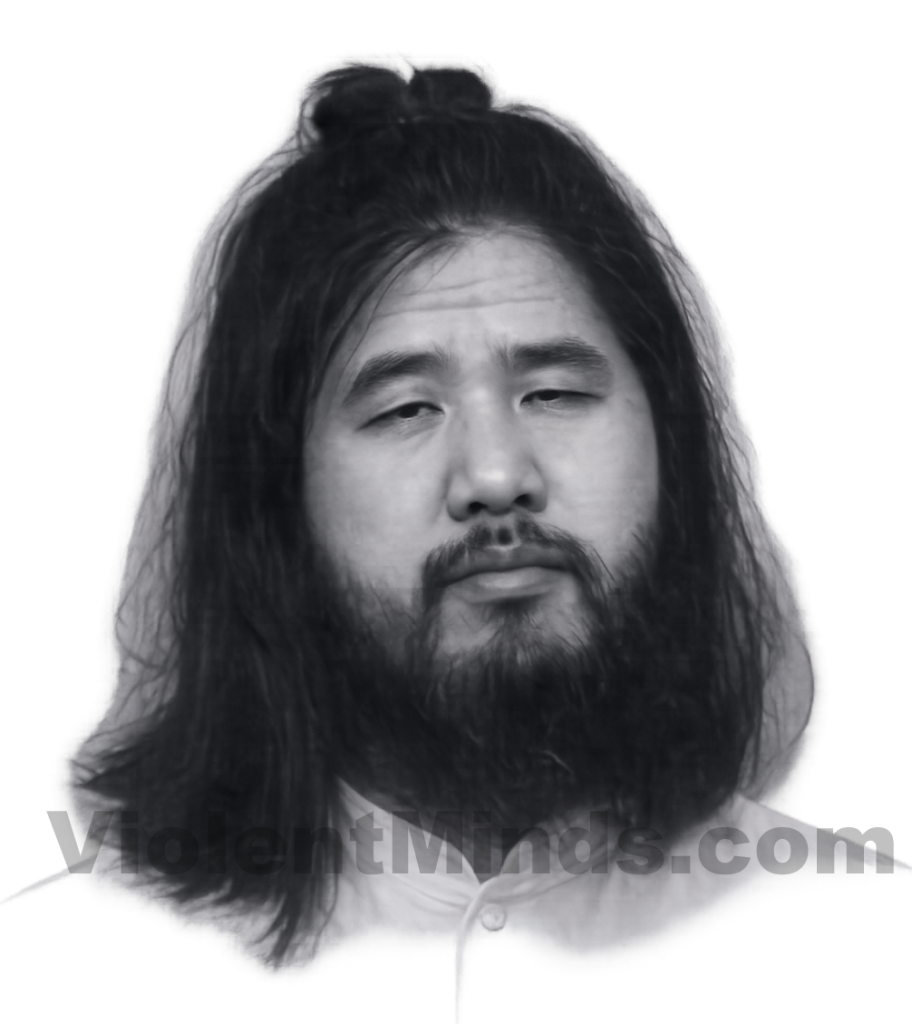
Introduction
Shoko Asahara (born Chizuo Matsumoto, 1955–2018) was the founder and leader of Aum Shinrikyo, a Japanese doomsday cult that transformed into a violent, millenarian terrorist organization. Under his direction, Aum carried out the 1995 Tokyo subway sarin attack – the deadliest terrorist incident in modern Japanese history-as well as earlier chemical attacks, assassinations, and failed bioterrorism efforts. Asahara was convicted on multiple counts of murder and terrorism and executed by hanging in 2018.
Early Life and Path to Religious Leadership
Asahara was born in Yatsushiro, Kumamoto Prefecture, Japan, into a poor family; he was visually impaired and attended a school for the blind, where he reportedly bullied younger, weaker students while cultivating influence over others. After graduation he trained as an acupuncturist and operated a small herbal medicine and acupuncture business, gaining a modest following as a healer and spiritual advisor.
In the early 1980s he immersed himself in a range of religious and esoteric traditions – yoga, Buddhism, Hinduism, and New Age spirituality – claiming to have had powerful mystical experiences. In 1984 he founded a small group called AUM Shinsen no Kai, offering yoga and meditation classes that promised special powers and enlightenment. The group formalized as Aum Shinrikyo (“Supreme Truth”) in 1987 and gained legal recognition as a religious corporation in Japan in 1989.
Aum Shinrikyo: Beliefs and Growth
Aum’s doctrine blended elements from Vajrayana Buddhism, Hinduism (especially depictions of Shiva), Christian apocalyptic imagery, and Asahara’s own revelations. He preached a syncretic, esoteric path of yoga‑based practice, claiming to impart supernatural abilities such as levitation, telepathy, and karmic purification through his initiation rituals.
In 1992, Asahara published Declaring Myself the Christ, asserting that he was both Christ and the only fully enlightened master in Japan, identifying himself with the Lamb of God and claiming a mission to take others’ sins upon himself. He presented himself as a savior who could transfer spiritual power to followers, charging high fees for initiations and “sacraments,” some involving ingestion of his blood or bathwater.
Aum’s teachings increasingly centered on an impending apocalypse. Asahara prophesied a coming Third World War and nuclear “Armageddon” (a term borrowed from the Book of Revelation), often suggesting that dark conspiracies involving Jews, Freemasons, the British royal family, and rival religions were plotting against Aum and Japan. He framed the coming cataclysm as both inevitable and spiritually necessary, telling followers that only Aum practitioners would survive and help build a purified “Aum kingdom” after the destruction.
By the early 1990s Aum had attracted thousands of members in Japan and abroad, including highly educated elites – scientists, engineers, and medical professionals – drawn by its mix of meditation, promised powers, and grand spiritual narrative.
Militarization: Chemical and Biological Weapons
Under Asahara’s direction, Aum Shinrikyo moved from esoteric religion into militarized apocalyptic preparation.
The group developed a clandestine paramilitary and scientific infrastructure:
- A large compound at Kamikuisshiki near Mount Fuji, housing laboratories and industrial‑scale facilities.
- Dedicated teams of scientists and engineers tasked with producing chemical and biological weapons.
- Acquisition of equipment and materials sufficient to attempt production of sarin, VX nerve agents, and biological agents.
Aum attempted several bioterrorism projects, including:
- Spraying Bacillus anthracis (anthrax) spores from the headquarters’ rooftop in 1993, which failed to cause disease but produced foul odors in the neighborhood.
- Attempted production and dispersal of botulinum toxin, which also failed.
They eventually shifted focus to nerve agents. Aum produced sarin and VX at facilities such as the Satyan-7 chemical plant, and used them in multiple assassination attempts and attacks:
- The 1994 Matsumoto sarin attack: a refrigerated truck was used to release sarin gas into a residential area, killing eight people and injuring hundreds.
- VX attacks on individual targets, including the murder or attempted murder of perceived enemies and defectors.
These acts were intended both to eliminate perceived opponents and to test Aum’s weapon capabilities in preparation for larger operations.
The Tokyo Subway Sarin Attack
Diagram detailing the sarin attack route on the Tokyo Metro Chiyoda Line, marking key event locations.
On the morning of March 20, 1995, Aum Shinrikyo carried out a coordinated nerve‑gas attack on the Tokyo subway system, directly planned and ordered by Asahara.
Five Aum operatives boarded trains on three major lines converging in central Tokyo near government and police hubs. Each carried liquid sarin in plastic bags wrapped in newspaper. At designated stations they punctured the bags with sharpened umbrellas and left them on the train floors, allowing sarin to vaporize in enclosed subway cars and platforms during rush hour.
The attack:
- Killed 13 people (some official counts cite 13 or 14) outright.
- Seriously injured dozens and caused varying degrees of poisoning in an estimated 5,000–6,000 people.
- Overwhelmed emergency services and caused widespread panic.
Subsequent investigation revealed that Asahara ordered the attack in part to pre‑empt a major police raid against Aum and in part to trigger the apocalyptic conflict he had been prophesying.
Arrest, Trial, and Execution
Following the subway attack, Japanese authorities launched massive raids on Aum facilities, seizing chemicals, weapons, and extensive documentation. Hundreds of members were arrested.
Asahara was found hiding in a small, concealed room within the Kamikuisshiki compound on May 16, 1995. He was charged with numerous offenses, including:
- Orchestrating the Tokyo subway sarin attack.
- Directing the Matsumoto sarin attack.
- Involvement in other murders and attempted murders, including the killing of lawyer Tsutsumi Sakamoto and his family.
His trial, which began in 1996, lasted years and was dubbed Japan’s “trial of the century.” He was ultimately convicted on 13 of 17 charges, including multiple counts of murder and terrorism, and sentenced to death by hanging on February 27, 2004.
After prolonged appeals and legal proceedings, Asahara was executed on July 6, 2018, along with several senior Aum figures.
Psychological Profile
Asahara’s mental state and personality have been the subject of detailed psychiatric and criminological analysis.
A comprehensive Japanese study of his psychopathology concluded:
- He exhibited self‑righteousness and grandiosity, presenting himself as Buddha, Christ, and a world‑saving messiah.
- He showed a marked lack of empathy and disregard for others’ rights, reflected in lynching murders and mass attacks carried out with indifference to victims’ suffering.
- He demonstrated pseudologia phantastica – pathological, elaborate lying – through grandiose fantasies such as detailed Armageddon prophecies and promises of a utopian “Aum Truth Empire.”
The same work noted that his personality features met classic criteria for severe personality disorder: egocentricity, manipulativeness, and exploitation of followers, paired with fantastic, self‑aggrandizing lies.
Later in his trial, Asahara’s mental status deteriorated, with observers reporting mutism, disorganized behavior, and a seeming disconnect from proceedings; some experts suggested he had become “unfit to plead” and required psychiatric treatment. However, analyses emphasize that his crimes and decisions leading up to them were goal‑directed and organized, driven by ideological and personality pathology rather than florid psychosis alone.
FOR READERS FASCINATED BY CRIMINAL MINDS
From the creators of Violent Minds comes Murder.net - a psychological cyber-thriller about control, fear, and obsession, where a killer streams his murders online to paying subscribers. How far would you go to stop a monster?
Get The Book
