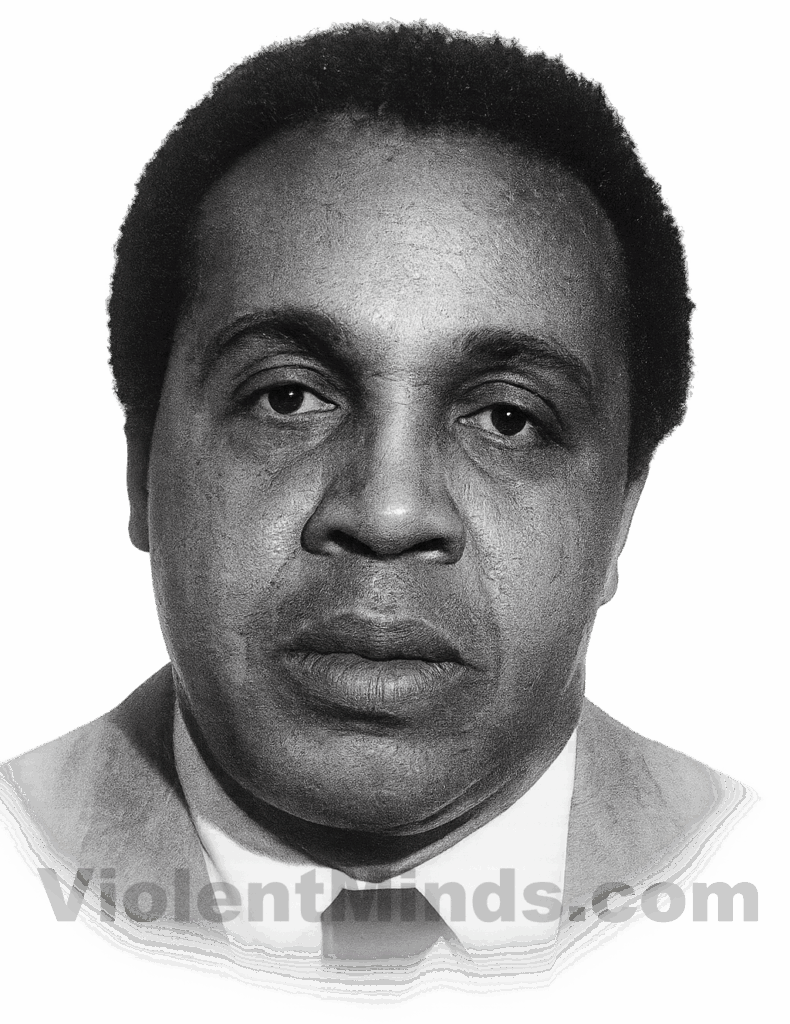
Frank Lucas: The Architect of “Blue Magic” and America’s Most Notorious Drug Lord
Introduction
Frank Lucas (September 9, 1930 – May 30, 2019) became one of Harlem’s most notorious heroin traffickers through ruthless ambition and an unusually direct connection to suppliers in Southeast Asia. His “Blue Magic” organization in the late 1960s and early 1970s sold unusually potent heroin and sought to reduce reliance on traditional Mafia-controlled supply channels. Lucas later portrayed himself as the architect of a direct Golden Triangle pipeline, but court records and later investigations show that Leslie “Ike” Atkinson and Herman Jackson played central roles in the Far East importation network, and some elements of Lucas’s account were embellished or disputed. His criminal empire generated enormous profits while contributing to addiction and overdose deaths in the communities it served. Lucas’s dual identity – a flashy kingpin in chinchilla coats at championship fights versus a calculated strategist who declared “the loudest one in the room is the weakest” – exemplifies the complex psychology of power, control, and moral detachment that defined his reign.
Early Life: Roots of Ambition
Born in rural La Grange, North Carolina, Lucas grew up in poverty under Jim Crow segregation. His formative years were marked by racial violence and economic hardship, fueling a relentless drive to escape his circumstances. After moving to Harlem as a teenager, he became a protege of gangster Ellsworth “Bumpy” Johnson, learning organized crime fundamentals while developing his own philosophy: “In this life, you’re either somebody, or you ain’t nobody.” When Johnson died in 1968, Lucas seized the opportunity to rebuild Harlem’s drug trade under his own rules.
The “Blue Magic” Empire: Innovation and Brutality
Revolutionizing the Supply Chain
Lucas later claimed that his criminal advantage came from reducing middlemen and buying heroin closer to its Southeast Asian source. He described traveling to Bangkok and establishing contacts that ultimately connected his organization with suppliers in the Golden Triangle. However, court records identify Leslie “Ike” Atkinson and Herman Jackson as key figures who controlled the Far East importation side of the enterprise, and later reporting has challenged Lucas’s tendency to cast himself as the sole architect of the route. The methods associated with the operation became part of his legend:
- The Cadaver Connection: Lucas claimed he shipped heroin in coffins of dead U.S. soldiers (though associate Leslie “Ike” Atkinson denied this, citing furniture shipments).
- Military Corruption: He bribed U.S. soldiers to transport drugs on military planes from Vietnam to bases on the East Coast.
Branding and Distribution
Lucas’s product, branded “Blue Magic” for its high purity, dominated Harlem:
- Family Control: He employed only relatives and childhood friends from North Carolina (“Country Boys“), minimizing betrayal risks.
- Quality Control: Workers mixed heroin in the nude to prevent theft, ensuring consistent potency.
- Market Domination: Sold uncut heroin at premium prices, causing mass addiction and overdoses.
By 1972, Lucas owned a Teaneck mansion, drove Rolls-Royces, and wore a $125,000 chinchilla coat to the Ali-Frazier fight-symbolizing his audacious rise.
Downfall: Arrests and Betrayal
The 1975 Raid
After a two-year investigation, a DEA/NYPD task force raided Lucas’s Teaneck home on January 28, 1975. They seized $584,000 in cash (Lucas alleged $11 million was stolen), keys to Cayman Islands banks, and property deeds. The evidence led to his conviction on federal and state charges, resulting in a 70-year sentence.
Witness Protection and Recidivism
Facing decades in prison, Lucas became an informant in 1977:
- Cooperation: Lucas became a government informant and assisted prosecutors in numerous narcotics cases. Some biographical accounts describe his information as contributing to roughly 150 multi-defendant cases involving traffickers, suppliers, Mafia associates, and members of his own organization. That figure should not be read as 150 convictions, and court records specifically establish that his cooperation did not lead to the conviction of any DEA agent, NYPD officer, or other law-enforcement official.
- Release: Sentences were reduced to time served (5 years) plus lifetime parole in 1981.
- Repeat Offenses: Arrested again in 1984 for heroin trafficking (7 years) and in 2012 for disability fraud (5 years’ probation).
Psychological Profile: The Mind of a Gangster
ESTJ Personality: The Executive
Lucas exemplified the ESTJ (Extroverted, Sensing, Thinking, Judging) archetype:
- Strategic Pragmatism: Focused on logistical efficiency, from Thai poppy fields to Harlem distribution.
- Authoritarian Control: Demanded absolute loyalty from his “Country Boys,” using violence to enforce discipline.
- Emotional Detachment: Viewed victims as “drug-addicted vermin,” neutralizing guilt through dehumanization.
Enneagram 8: The Challenger
As an Enneagram Type 8, Lucas thrived on dominance:
- Power Obsession: Built his empire to defy systemic racism and Mafia control, declaring, “I beat the Italians at their own game.”
- Ruthless Protection: Shielded his family while terrorizing rivals – exemplified by his motto: “Honesty and hard work… if you ain’t got that, you got nothing.”
Scorpio Traits: Strategic Vengeance
Astrologically aligned with Scorpio, Lucas embodied:
- Calculated Secrecy: Operated anonymously for years by avoiding flashy competitors’ mistakes.
- Transformative Ambition: Turned childhood trauma into relentless upward mobility.
Psychopathic Elements
- Grandiose Self-Image: Boasted about “$52 million” in assets while dismissing his societal impact.
- Lack of Remorse: Admitted late in life, “I probably did more damage than good… but at the time, all I knew was big dollars.”
Legacy and Cultural Impact
American Gangster Mythos
The 2007 film American Gangster cemented Lucas’s legend but sanitized his brutality. Key truths vs. fiction:
- Coffin Smuggling: Likely exaggerated; evidence points to furniture shipments.
- Violence: Lucas famously claimed that he established his reputation by shooting a feared Harlem rival known as “Tango” in broad daylight. The episode has been widely repeated, but the rival’s surname is not reliably established in authoritative accounts, Lucas was never prosecuted for the killing, and he later denied committing it.
Systemic Failures Exposed
Lucas exploited institutional weaknesses:
- Military Corruption: U.S. soldiers facilitated his supply chain during the Vietnam War.
- Joint Investigation: Federal DEA agents conducted the investigation that culminated in Lucas’s 1975 arrest, with assistance from NYPD officers. Available court records describe interagency cooperation rather than documented jurisdictional disputes that delayed his apprehension.
Death and Contrition
Lucas died at 88 on May 30, 2019, in Cedar Grove, New Jersey. In later interviews, he expressed regret: “Heroin is the worst business… you can’t get no lower.” His life remains a case study in how trauma, ambition, and systemic inequality forge criminal legacies-and how charisma masks moral decay.
Conclusion
Frank Lucas redefined American organized crime through ingenuity and ruthlessness. His psychologically “insane” duality – family man versus merciless kingpin – reveals how psychopathic traits (grandiosity, emotional detachment) merge with strategic brilliance to build empires. Yet beneath the American Gangster mythology lies a darker truth: Lucas’s “Blue Magic” devastated generations, proving that even revolutionary criminal enterprises leave only ruins in their wake. His legacy endures as a cautionary tale of power’s corrosive allure and the human cost of unchecked ambition.
The TRUE Story Of ‘American Gangster’ Frank Lucas | Our History
FOR READERS FASCINATED BY CRIMINAL MINDS
From the creators of Violent Minds comes Murder.net - a psychological cyber-thriller about control, fear, and obsession, where a killer streams his murders online to paying subscribers. How far would you go to stop a monster?
Get The Book
