Nikolas Cruz – The Parkland High School Shooter
Introduction
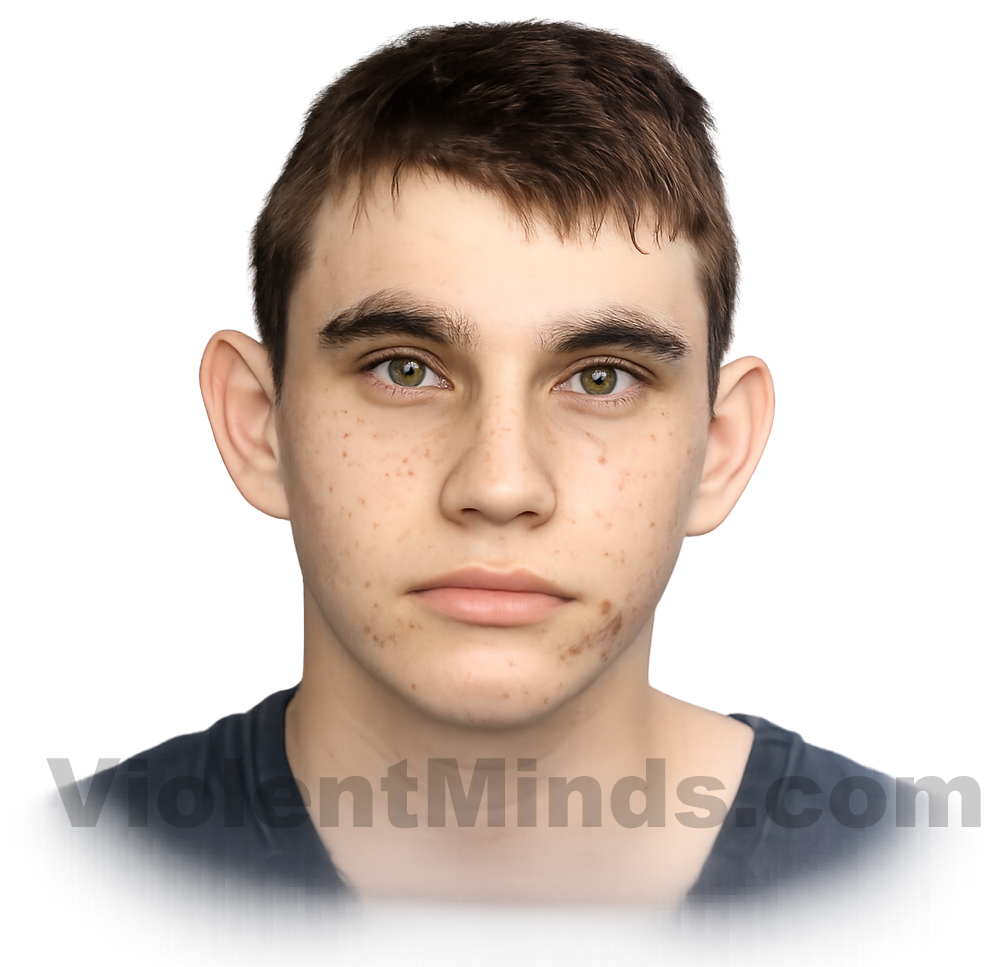
On February 14, 2018, 19‑year‑old Nikolas Cruz walked into Marjory Stoneman Douglas High School in Parkland, Florida, and turned a three‑story classroom building into the site of one of the deadliest high‑school shootings in U.S. history. Armed with an AR‑15–style rifle and more than 300 rounds of ammunition, he killed 17 people and wounded 17 others in about six minutes before discarding his weapon and blending into the panicked crowd fleeing campus. His arrest roughly an hour later ended the attack but not the questions it raised: how a “broken child,” as one report called him, made his way through years of red flags, system contacts, and warnings to become a mass killer – and why no one stopped him.
Early Life and Family Background
Nikolas Jacob Cruz was born on September 24, 1998, in Florida to a biological mother who, according to later testimony, abused alcohol and drugs during pregnancy. Shortly after birth he and his younger half‑brother, Zachary, were adopted by Lynda and Roger Cruz, a middle‑aged couple in Parkland, an affluent suburb in Broward County. On paper, the adoption offered stability: a large home, financial security, and parents eager for children. In practice, Cruz’s early years were marked by signs of developmental and behavioral trouble that would only intensify with time.
As a young child he exhibited frequent tantrums, difficulty with impulse control, and aggression toward others. He lagged behind peers in language and social skills, and his adoptive parents sought help from pediatricians, therapists, and the school system. Over the years he picked up a list of diagnoses: attention‑deficit/hyperactivity disorder (ADHD), depression, developmental delays, and emotional and behavioral disorders that led to placement in special‑education programs. His adoptive father died of a heart attack when Cruz was in elementary school, leaving Lynda to manage two increasingly troubled boys on her own.
Childhood, Adolescence, and Escalating Problems
By middle school, Cruz’s issues had hardened into a pattern of disruptive and often alarming behavior. Teachers and classmates reported that he threatened peers, cursed at staff, and got into fights. He was fascinated by violence and weapons: he drew guns and swastikas in notebooks, talked about shooting people, and, according to some accounts, killed animals or boasted about harming them – a classic warning sign in the developmental pathway toward serious aggression.
School records show frequent suspensions and disciplinary referrals. He brought bullets to school, posted pictures of weapons, and made explicit threats, at times saying he wanted to “shoot up” a school or that he wanted to buy a gun to kill people. Staff responded with referrals to counseling, crisis evaluations, and behavior plans, and he was moved between specialized and mainstream settings. Yet despite his status as a high‑risk, high‑needs student, there was no sustained, coordinated treatment plan that followed him across years; instead, each incident was managed in isolation, and over time, the system’s tolerance for his behavior seemed to normalize the abnormal.
At home, the situation deteriorated. Lynda struggled to control Nikolas’s outbursts and destructive behavior, calling police to the home numerous times over domestic incidents. Deputies documented fights, self‑harm threats, and episodes in which he brandished guns or talked about shooting people, but they ultimately concluded there was insufficient legal basis to involuntarily commit him or charge him with a crime. The Florida Department of Children and Families investigated after one tip about online threats but closed the case after determining he posed no “current” risk.
Obsession with Guns and Violence
As Cruz moved into late adolescence, his fixation on weapons and mass shootings intensified. In 2016 and 2017, he maintained social‑media accounts under his own name and aliases where he posted photos of firearms, ammunition, tactical vests, and dead animals. He wrote comments like “I’m going to be a professional school shooter” on YouTube and made threats about killing law‑enforcement officers and minorities. One YouTube user reported the “professional school shooter” comment to the FBI in 2017, but agents were unable to confirm the poster’s identity and closed the inquiry.
In February 2017, at age 18, Cruz legally purchased a Smith & Wesson M&P15 AR‑15–style rifle from a local gun shop, passing a background check because he had no felony record, no domestic‑violence convictions, and no disqualifying mental‑health adjudications. He also bought multiple magazines and accumulated more than 300 rounds of ammunition over the following months. He practiced at local shooting ranges and took photos and videos of himself with the rifle, sometimes wearing a ski mask or tactical vest, which he uploaded to social media.
Peers recalled that he spoke openly about guns, hurting people, and wanting to shoot up a school, to the point that some students started avoiding him and joked darkly that if anyone were to attack the school, it would be him. School staff, already familiar with his history, banned him from carrying a backpack on campus because they feared he might bring weapons; they also circulated an internal notice barring him from returning to campus with a bag after he was expelled in 2017.
Expulsion, Loss, and Final Descent
Marjory Stoneman Douglas High School expelled Cruz during the 2016–2017 academic year for disciplinary reasons, including fighting and repeated violations involving weapons or ammunition. That decision removed him from the one structured setting that, however imperfectly, had eyes on him. He tried attending an alternative learning center but eventually withdrew, drifting into unemployment and isolation.
In November 2017, his adoptive mother Lynda died suddenly from complications of pneumonia. Her death severed his primary emotional support and left him effectively adrift. Friends’ families took him in temporarily; one family in Lantana let him live with them and tried to impose rules – locking their guns in a safe, requiring him to attend a GED program – but he remained volatile and depressed, spending hours playing violent video games and scrolling through gun forums. Another friend’s family in Parkland housed him briefly but became alarmed by his behavior and gun obsession. In the months between Lynda’s death and the shooting, Cruz’s online posts grew darker, and his fixation on carrying out an attack appeared to solidify.
Timeline of the Attack
Valentine’s Day 2018 began like a normal school day for most students at Marjory Stoneman Douglas, but Cruz had his own script. Around 2:06 p.m., he summoned an Uber to take him to the school, carrying a rifle case and a backpack filled with loaded magazines. The driver later said he seemed quiet and unremarkable during the ride. He arrived at campus around 2:19 p.m., exiting near the east side of Building 12, the three‑story freshman classroom building.
He entered the building through an unlocked side door and went up the stairwell to the third floor briefly, then descended to the second and finally to the first, where he unpacked his rifle on the landing and donned a tactical vest. At approximately 2:21 p.m., he stepped into the first‑floor hallway and began firing at students standing outside classrooms, killing three and wounding one within seconds.
Cruz moved along the corridor, firing through the glass panes of classroom doors into rooms 1216, 1214, 1213, and 1210, where teachers and students were reacting to the sound of gunfire. He killed or fatally wounded multiple students and staff on that floor, then proceeded to the second floor, where he fired into two empty classrooms and the teachers’ lounge.
On the third floor, he encountered students and staff in the hallway who had not yet fully processed what was happening. There he shot and killed five more students and one staff member, including some who were running toward the stairwells. He attempted to shoot out the hurricane‑resistant windows in the teachers’ lounge to target people fleeing outside, but the glass held.
The entire shooting – first shot to last – lasted about six minutes. As the fire alarm blared and students fled, Cruz dropped his rifle and tactical gear on the third floor, slipped down a stairwell, and exited the building, blending into the crowd of evacuating students. Surveillance footage later showed him walking calmly off campus.
After leaving the school grounds, he walked to a nearby Walmart and then to a McDonald’s, buying a drink and appearing almost detached from what had just happened. At about 3:41 p.m., a Coral Springs police officer spotted him walking on a residential street in Coral Springs and detained him without incident. In a subsequent interrogation, Cruz confessed to the shooting, detailing his movements and stating that he had brought extra magazines intending to continue killing if he could.
Legal Proceedings and Sentencing
Prosecutors charged Cruz with 17 counts of first‑degree premeditated murder and 17 counts of attempted first‑degree murder. Initially he pleaded not guilty, but in October 2021, he changed his plea to guilty on all counts, acknowledging his actions in a courtroom packed with victims’ families. That decision shifted the focus from guilt to punishment: the state sought the death penalty, while the defense asked for life without parole, citing his brain damage and mental illness.
The penalty phase, which began in 2022, became one of the most extensive in Florida history. Prosecutors presented surveillance videos, graphic autopsy evidence, and harrowing testimony from survivors and relatives, arguing that the murders were cold, calculated, heinous, and cruel, and that Cruz’s planning and expressed desire to be a school shooter warranted execution. The defense assembled a narrative of a profoundly damaged individual: experts testified that prenatal exposure to alcohol and drugs had left him with fetal alcohol spectrum disorder and structural brain abnormalities; childhood evaluations documented developmental delays, ADHD, mood disorders, and repeated unmet needs for intensive treatment.
In October 2022, after days of deliberation, the jury recommended life imprisonment without parole rather than the death penalty. Florida law requires a unanimous jury verdict for death; at least three jurors voted for life based on mitigating factors, making a death sentence legally impossible. The judge sentenced Cruz to 17 consecutive life sentences for the murders and 17 concurrent life sentences for the attempted murders, ensuring he will spend the rest of his life in prison.
Psychological Autopsy
Both prosecution and defense mental‑health experts examined Cruz, producing a complex psychological picture that blends organic brain damage, mental illness, and entrenched personality traits. Testimony and records indicate he meets criteria for fetal alcohol spectrum disorder, with neuroimaging showing structural abnormalities in brain regions linked to impulse control, emotional regulation, and executive functioning. He also carried multiple diagnoses over the years: ADHD, depressive disorder, anxiety, and possible autism‑spectrum–like traits, along with conduct‑like behaviors such as animal cruelty and persistent rule‑breaking.
Yet, as many analysts stressed, these conditions are neither necessary nor sufficient to explain mass murder. What stands out in Cruz’s case is how his vulnerabilities intersected with other risk factors: chronic bullying and social rejection; parental loss and inconsistent caregiving; normalization of violence and racism in his peer group and online circles; and, crucially, ready access to high‑powered weapons. He appears to match the “injustice collector” profile: a young man who stored up perceived slights and humiliations, saw himself as unloved and marginalized, and gradually embraced a violent identity as a way to reclaim power and significance.
His online statements and post‑arrest comments suggest both suicidal ideation and a grandiose desire for infamy. He told a psychologist he chose Valentine’s Day because he believed no one loved him and wanted the date to carry his imprint; he talked about hearing “demons” or voices telling him to “burn, kill, destroy,” though experts disagreed on whether these were psychotic symptoms or a way of externalizing his own violent impulses. The methodical planning, fascination with previous school shootings, and desire to surpass them in body count all point to a mind that had fused personal despair with a fantasy of catastrophic impact.
System Failures and Legacy
The Parkland shooting exposed a dense network of missed opportunities and systemic breakdowns. Over the years, Broward County schools, the sheriff’s office, child‑welfare authorities, and the FBI all received warnings about Cruz’s behavior – from violent social‑media posts and explicit threats to “shoot up” a school, to repeated domestic‑disturbance calls – yet none resulted in sustained intervention that removed his access to weapons or placed him in a secure treatment setting. School discipline and special‑education processes addressed incidents piecemeal; law enforcement often treated calls as minor disturbances; and the tip to the FBI about his “professional school shooter” comment was not fully developed.
On the day of the shooting, there were additional failures. A school security monitor recognized Cruz approaching Building 12 and radioed that the “suspicious” former student was on campus with a bag, but he did not immediately initiate a Code Red lockdown, and there was confusion about who had authority to do so. The Broward County sheriff later faced heavy criticism for the actions of school resource officer Scot Peterson, who remained outside the building during the shooting instead of confronting the gunman.
In the aftermath, Parkland survivors channeled their trauma into activism. Students founded March for Our Lives, organized massive demonstrations, and pushed for reforms at the state and national level. Florida passed the Marjory Stoneman Douglas High School Public Safety Act, which raised the minimum age to purchase long guns from 18 to 21, imposed waiting periods, created a “red flag” risk‑protection order process, and increased funding for school safety and mental‑health services.
For many of the families, however, policy changes will never balance the ledger. Cruz’s case stands as a stark illustration of how a deeply damaged individual can move through years of warning signs – documented threats, explicit fantasies of violence, obvious obsession with weapons – and still reach the point of pulling a trigger in a school hallway. In that sense, his story is not just about one shooter’s pathology, but about the systems that saw him coming and, despite everything, let him arrive.
FOR READERS FASCINATED BY CRIMINAL MINDS
From the creators of Violent Minds comes Murder.net - a psychological cyber-thriller about control, fear, and obsession, where a killer streams his murders online to paying subscribers. How far would you go to stop a monster?
Get The Book
