Salvador Ramos – The Robb Elementary School Shooter
Introduction
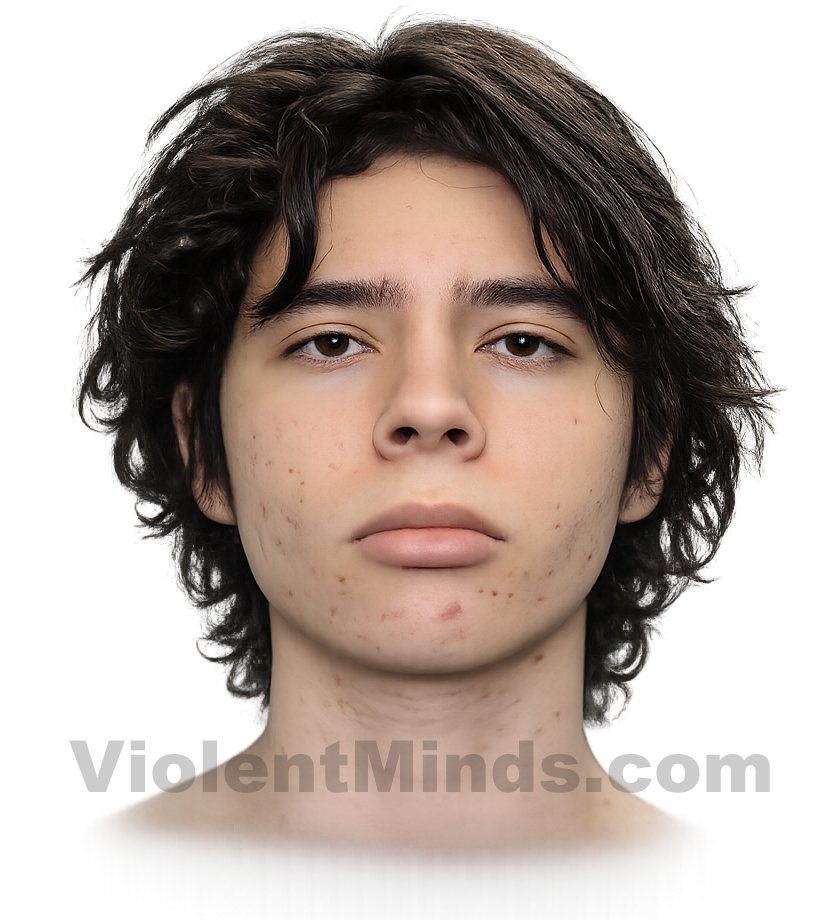
On May 24, 2022, 18‑year‑old Salvador Ramos walked into Robb Elementary School in Uvalde, Texas, and turned two adjoining fourth‑grade classrooms into a slaughterhouse. Armed with an AR‑15–style rifle and dozens of high‑capacity magazines, he killed 19 children and 2 teachers and wounded others in a rampage that lasted only minutes – but was followed by a 74‑minute police stand‑off that horrified the world. Before heading to the school, Ramos had shot his grandmother in the face at home, nearly killing the one adult who had tried hardest to keep him anchored. In the aftermath, investigators would trace a path of bullying, family chaos, academic failure, and online obsession with violence that brought him to that day, and they would catalog a chain of systemic failures that left his warnings unanswered and his victims unprotected.
Early Life and Family Background
Salvador Rolando Ramos was born on May 16, 2004, and grew up in Uvalde, a small, largely Latino town roughly 80 miles west of San Antonio. His childhood unfolded in cramped houses and modest neighborhoods, with family members cycling in and out and adults contending with addiction, conflict, and economic strain. Reporters and investigators later described a home where shouting and arguing were common and stability was rare; his mother struggled with drug use, and Ramos spent significant stretches living with his grandmother Celia “Sally” Gonzales, who worked at a local fast‑food restaurant and tried to give him some structure.
At school, Ramos initially presented as a fairly typical elementary‑age boy – engaged enough in class, occasionally motivated – but the cracks showed early. He had a speech impediment that drew ridicule from classmates, wore the same clothes repeatedly, and was mocked for perceived poverty and awkwardness. Teachers saw a quiet child who could be disruptive and occasionally aggressive; peers saw someone who was “weird,” easily provoked, and increasingly alone.
Adolescence and Escalating Problems
By middle school, Ramos’s problems had hardened into patterns. He was frequently disciplined for classroom disruptions, fighting, and defiance; he cursed at teachers, got into altercations with peers, and began slipping academically. The Texas House investigative committee later found that he was identified as “at risk” due to failing grades and chronic absenteeism but never received special‑education services or a formal evaluation for emotional or behavioral disorders.
Bullying followed him into adolescence. Classmates recalled that he was targeted for stuttering and wearing unfashionable clothes, and that some students posted videos of him on social media as he lashed out in anger. Rather than drawing him into support, those experiences deepened his resentment and isolation. He spent more and more time online, gaming and scrolling through social platforms, cultivating an identity as someone separate from – and hostile to – the people around him.
At home, things were little better. Ramos bounced between his mother’s place and his grandmother’s house, sometimes staying with other relatives when conflict flared. Police were reportedly called to domestic disturbances at the family home, and there were periods when his mother’s drug use and relationships created chaos that further undercut any sense of safety. As he approached 16 and 17, he increasingly withdrew from both family and school, skipping classes until his absences became the norm rather than the exception.
By his junior year, he had effectively checked out. He stopped attending classes regularly at Uvalde High School and failed courses; eventually, he dropped out entirely without graduating. Teachers and administrators saw the records of a struggling, disengaged student; what they did not see – or did not act on – were the deeper shifts in his preoccupations and self‑image.
Obsession with Guns, Violence, and Notoriety
In the year leading up to the Robb Elementary attack, Ramos’s interests coalesced around guns and violence in a way that multiple people noticed and largely dismissed. Friends and acquaintances said he became fixated on firearms and tactical gear, talking about AR‑15‑style rifles and posting images of weapons and ammunition on Instagram, Snapchat, and other platforms. He shared photos of magazines loaded with rounds, screenshots of online orders, and images of himself in all‑black clothing with a tactical vest, projecting a persona steeped in aggression.
Peers also described cruel behavior that went beyond typical adolescent acting out. Some said he shot BB guns at people and cars, drove around at night firing an airsoft gun at random targets, and boasted about hurting animals. He bragged about fights and posted videos of outbursts, and there were reports of self‑harm and threats of sexual violence. Several people – both online and in person – began referring to him as a “school shooter,” a dark joke that, in hindsight, looks less like hyperbole and more like a crude recognition of where his trajectory was heading.
Despite the growing red flags, there is no evidence that Ramos was evaluated by a mental‑health professional or that his behavior triggered a formal threat assessment. The Texas House report found that his school had tools on paper to identify and support at‑risk students, but those mechanisms were inconsistently applied and did not produce sustained intervention in his case. The adults who might have connected his bullying, aggression, and fixation on guns into a coherent picture either did not see all the pieces or did not act on them.
Firearm Purchases and Final Preparations
Texas law allowed Ramos to buy long guns at 18, and he appears to have planned around that milestone. Within days of his 18th birthday in May 2022, he legally purchased two AR‑15–style rifles – a Daniel Defense semi‑automatic rifle and another similar platform – from licensed dealers in the Uvalde area, passing background checks because he had no criminal record and no documented mental‑health adjudications. He also bought hundreds of rounds of 5.56‑caliber ammunition and multiple 30‑round magazines, along with a tactical vest designed to carry them.
Leading up to the shooting, he continued to telegraph his intentions online, particularly to young women he barely knew. He sent direct messages asking about their thoughts on his rifle purchases, bragged that he had “big things” coming on a specific date, and posted vague but ominous warnings that something was going to happen. One teenager in Germany later reported that he had told her he had just shot his grandmother and was going to “shoot up an elementary school” shortly before the attack. These communications again reflected a pattern seen in other mass shooters: a desire not just to commit violence, but to be seen and acknowledged for it in advance, as if inviting the world to bear witness to his transformation from invisible loner to headline‑making killer.
Timeline of the Attack
On the morning of May 24, 2022, events unfolded quickly. Shortly after 11:00 a.m., at the residence he shared with his grandmother on Diaz Street, Ramos argued with her – reportedly about his phone or his failing grades – and then shot her in the face with one of his rifles. Bleeding severely but still conscious, she fled to a neighbor’s house for help; a 911 call went out, but the information would not be connected to the unfolding school attack in time.
Ramos loaded his AR‑15–style rifle, magazines, and other gear into his grandmother’s pickup truck and drove toward Robb Elementary School, which he had once attended. At approximately 11:28–11:30 a.m., he crashed the truck into a ditch just outside the school grounds. Two men from a nearby funeral home approached to help; Ramos fired at them but missed, then climbed the fence onto school property and walked toward the building, firing additional shots at the exterior and at classrooms.
A teacher had propped open a side door earlier but then attempted to close it upon hearing gunfire; an investigation later found that while the door closed, it did not automatically lock as it should have. At about 11:33 a.m., Ramos entered the school through that door, carrying his rifle and a tactical vest loaded with seven 30‑round magazines. He moved down the hallway to a pair of adjoining fourth‑grade classrooms, 111 and 112, where teachers Irma Garcia and Eva Mireles were supervising 33 students near the end of the year.
When Mireles tried to close and lock the classroom door, Ramos fired through the door window, forced his way in, and began shooting. Witnesses later recalled him saying “Goodnight” as he opened fire on the children and teachers hiding under desks and tables. Over the next few minutes, he unleashed more than 100 rounds, killing 19 children – most of them 9 and 10 years old – and the two teachers, and wounding others. Some students survived by playing dead, hiding under bodies, or escaping through windows.
Police arrived at the school within minutes but misread the unfolding situation. Several officers entered the building and approached the classrooms but retreated after taking fire through the closed door, suffering minor injuries. Despite ongoing 911 calls from terrified children trapped inside the rooms, commanders on scene treated the situation as a “barricaded subject” rather than an active shooter, and heavily armed officers remained in the hallway for over an hour without attempting to breach.
At approximately 12:50 p.m. – about 77 minutes after Ramos first entered the classrooms – a Border Patrol BORTAC tactical team moved in. Using keys obtained from a janitor, they unlocked classroom 111, engaged Ramos, and killed him in a brief exchange of fire as he emerged from a closet‑like area. By then, the damage was irreversible: 21 people were dead, and the town of Uvalde would never be the same.
Psychological Autopsy
Because Salvador Ramos died during the confrontation and left no detailed manifesto, any psychological profile rests on witness interviews, school and social‑media records, and the limited investigative analyses available. Those sources paint a picture of a young man whose life combined several risk factors often seen in mass shooters: long‑term bullying and marginalization, family instability, academic failure, social isolation, fascination with weapons and previous shootings, and a desire for notoriety.
Peers described him as moody, quick to anger, and prone to sudden outbursts of aggression. He reportedly engaged in cruelty toward animals and boasted about violent acts – behaviors that, in the literature on offender development, often mark a trajectory toward more serious violence when combined with other factors. His heavy online presence, particularly his posting of guns and ammunition, aligns with a pattern of “leakage” in which would‑be attackers display their plans and identities in digital spaces as a way of both rehearsing and advertising their intent.
There is no public record of formal psychiatric diagnoses or treatment for Ramos, and officials have emphasized that they cannot point to a clear mental illness like psychosis driving his actions. Instead, his behavior suggests a personality steeped in grievance and nihilism: he appears to have internalized the role of the “loser” bullied by peers and responded by constructing a fantasy of ultimate power and revenge, where he could inflict maximum harm on the most vulnerable and force others to recognize his existence. The choice of his former elementary school as a target, and of very young children as victims, magnified the horror and ensured attention – an outcome consistent with a desire for grim notoriety rather than a specific personal vendetta against individual teachers or students.
System Failures and Aftermath
Investigations after Uvalde found two broad layers of failure: prevention deficits before May 24, and catastrophic breakdowns during the police response. On the prevention side, Ramos was repeatedly flagged as academically and behaviorally at risk. He failed classes, accumulated disciplinary referrals, and was known to staff as a struggling, disengaged student, yet he was never evaluated for special‑education eligibility and never received targeted mental‑health support. The Texas House committee concluded that Uvalde CISD had policies on paper for identifying and supporting such students but did not consistently use them or follow through.
At the same time, the state and federal legal environment made it easy for him to arm himself. Texas’s age and background‑check laws allowed him to buy semi‑automatic rifles and large amounts of ammunition immediately upon turning 18, and because he had no arrest record and no recorded mental‑health adjudications, he breezed through the sales. His online leakage – guns, threats, hints – reached individuals who were disturbed but did not know where to take their concerns or did not believe they would be taken seriously.
During the attack, the law‑enforcement response became its own tragedy. A U.S. Department of Justice critical incident review and other reports found that nearly 400 officers from multiple agencies ultimately responded, but unclear command, misclassification of the incident, lack of appropriate equipment, and failures of courage and judgment led to a 74‑minute delay in confronting Ramos after he entered the classrooms. Officers treated the scene as a barricaded‑suspect situation, prioritizing their own safety over the established “active shooter” doctrine that calls for immediate engagement to stop the killing. The image of heavily armed police standing in hallways while terrified children called 911 from inside the room, begging for help, became a national symbol of institutional failure.
In the wider policy landscape, Uvalde helped spur passage of the federal Bipartisan Safer Communities Act, which among other provisions strengthened background checks for gun buyers under 21, invested in school safety and youth mental‑health programs, and encouraged states to adopt crisis‑intervention “red flag” laws. In Texas, however, legislative changes were more limited, and debates continue over how to balance gun access with public safety.
For Uvalde itself, Robb Elementary has been permanently closed and a new school is planned, while memorials near the old campus honor the 21 victims. Families continue to push for transparency, accountability, and reforms, suing agencies and demanding release of records that officials have at times resisted sharing. Salvador Ramos, dead at 18, left behind no coherent explanation – only a trail of wounds and a case study in how a toxic blend of personal collapse, easy access to weapons, ignored warning signs, and institutional paralysis can coalesce into a single, devastating day.
FOR READERS FASCINATED BY CRIMINAL MINDS
From the creators of Violent Minds comes Murder.net - a psychological cyber-thriller about control, fear, and obsession, where a killer streams his murders online to paying subscribers. How far would you go to stop a monster?
Get The Book
