The Complete Story of Edmund Kemper: The Co-ed Killer
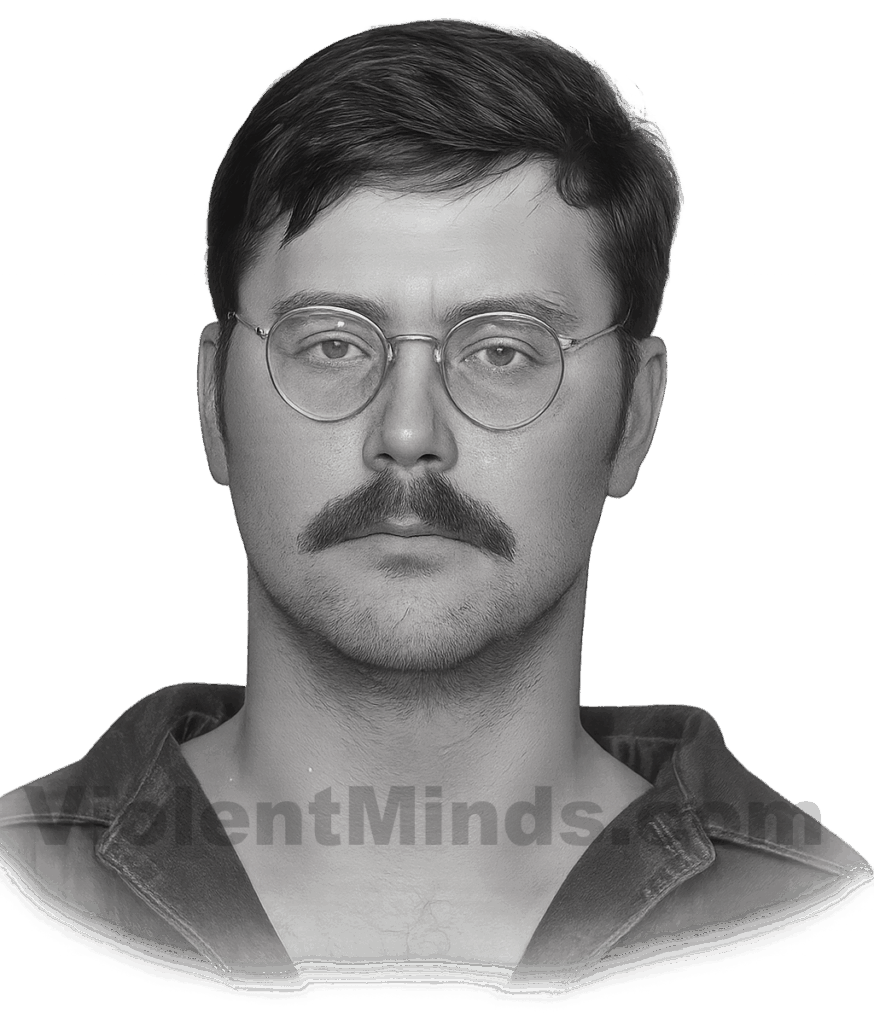
Introduction
Edmund Emil Kemper III stands as one of America’s most notorious and psychologically complex serial killers, whose crimes between 1964 and 1973 shocked the nation and later became important to the study of criminal psychology and behavioral profiling. Known as the “Co-ed Killer,” Kemper murdered ten people, including his paternal grandparents at age 15, six female college students, his mother, and her best friend. His crimes involved necrophilia, dismemberment, and reported cannibalism, while his unusual combination of intelligence, physical size, and manipulative ability has made his case a longstanding subject of forensic study. His psychological history includes severe childhood trauma and later diagnoses involving several personality disorders, including antisocial, narcissistic, and schizotypal personality disorders.
Early Life and Formative Trauma
Birth and Family Dysfunction
Edmund Emil Kemper III was born on December 18, 1948, in Burbank, California, as the middle child and only son of Edmund Emil Kemper Jr. and Clarnell Elizabeth Kemper (née Stage). His father was a World War II veteran who tested nuclear weapons at the Pacific Proving Grounds before working as an electrician, while his mother was described as an alcoholic prone to violent outbursts. Weighing 13 pounds as a newborn, Kemper was already physically imposing from birth and stood a head taller than his peers by age four.
The Kemper household was characterized by extreme dysfunction and violence from the beginning. His parents’ marriage was tumultuous, marked by constant arguments that culminated in divorce when Edmund was around seven years old. After the divorce in 1957, Kemper moved with his mother and two sisters to Montana, beginning a pattern of instability that would define his childhood.
Maternal Abuse and Psychological Torture
Clarnell Kemper emerges as the central figure in understanding Edmund’s psychological development and later crimes. She was an emotionally and physically abusive alcoholic who subjected her son to severe psychological torture that experts believe directly contributed to his violent behavior. When Kemper was ten years old, his mother forced him to live in the basement, away from his sisters, because she feared he might harm them in some way.
The abuse was both systematic and cruel. Clarnell would beat Edmund with a heavy belt and buckle, telling him not to scream “because the neighbors will think I’m beating you”. She constantly berated him with derogatory language, calling him “dumb and stupid,” a “mama’s boy,” a “sissy,” and a “weirdo,” while predicting he would never amount to anything. This relentless verbal abuse was designed to emasculate and control him, creating deep-seated feelings of worthlessness and rage.
Early Warning Signs and Disturbing Behaviors
Even as a young child, Kemper exhibited behaviors that foreshadowed his future violence. He performed ritualistic ceremonies with his sisters’ dolls that culminated in removing their heads and hands – a pattern he would later repeat with his human victims. When his elder sister teased him about kissing his teacher, he chillingly replied, “If I kiss her, I’d have to kill her first”.
Kemper invented and played macabre games including “Gas Chamber” and “Electric Chair,” in which he asked his younger sister to tie him up and pretend to execute him while he writhed in mock agony. He also admitted to sneaking out of his house armed with his father’s bayonet to watch his second-grade teacher through her windows. These behaviors demonstrate the early development of violent and sexual fantasies that would later escalate to murder.
Animal Cruelty and Escalating Violence
Kemper’s violence began with family pets, a common precursor to human violence in serial killers. At age ten, he buried one of the family cats alive, then dug it up, cut off its head, and mounted it on a stick. When he was 13, he slaughtered another cat with a knife. These acts of animal cruelty were not impulsive but calculated, demonstrating his growing comfort with killing and mutilation.
The First Murders: His Grandparents
The Move to North Fork
In 1963, after failed attempts to live with both divorced parents, 14-year-old Kemper was sent to live with his paternal grandparents, Edmund Sr. and Maude Kemper, on their ranch in North Fork, California. This placement was essentially a last resort after his troubled behavior had exhausted other options. His father had remarried and moved away with his new wife, leaving Kemper feeling abandoned and rejected.
The Murders of August 27, 1964
On August 27, 1964, the tensions that had been building in the troubled 15-year-old finally erupted into violence. Kemper and his grandmother Maude got into an argument while she was working on a story for Boys’ Life Magazine at her writing desk. According to his later confession, Kemper became enraged, retrieved his grandfather’s .22 caliber rifle, and positioned himself at the porch window.
He fired the first shot, striking his grandmother in the back of the head. Before she could fall, he fired two more shots into her back. Dropping the rifle, Kemper went to the kitchen, grabbed a butcher knife, and dragged his grandmother’s body into the bedroom where he stabbed her multiple times to ensure she was dead.
When his grandfather returned from the post office, Kemper made the calculated decision to kill him as well to prevent him from discovering the scene. He waited on the porch with the rifle until his 72-year-old grandfather turned his back, then shot him in the head, killing him instantly. He dragged the body into the garage before calling his mother and then the police.
When authorities asked why he had killed his grandmother, Kemper gave the chilling response: “I just wanted to see what it felt like to kill Grandma”. This statement reveals the calculating nature of his violence even at age 15.
Psychiatric Evaluation and Institutionalization
Initial Diagnosis and Hospitalization
Immediately after the murders, court psychiatrists declared Kemper to be “psychotic” and diagnosed him as a “paranoid schizophrenic“. He was sentenced to the criminally insane unit at Atascadero State Hospital, one of the largest forensic mental health facilities in the world. A staff summary from October 1964 described him as “extremely disturbed” with “self-destructive impulses” and noted that he had “acted out homicidal impulses against two cats over a period of a year“.
The initial psychiatric evaluation revealed the depth of Kemper’s psychological disturbance. He was described as being “overwhelmed with feelings of worthlessness, guilt, parental rejection” and having “great fears that he will suffer a psychotic episode“. The report noted that he had “thought long and hard about suicide and has attempted it repeatedly over a number of years“.
Manipulation of the System
While at Atascadero, Kemper demonstrated his extraordinary intelligence and manipulative abilities. He regularly scored at genius level on IQ tests, with scores ranging from 136 to 145. More dangerously, he charmed hospital authorities and positioned himself as a model patient. Kemper eventually gained the ability to perform psychiatric tests on other patients, which he used to learn how to manipulate the testing process.
During his testimony years later, Kemper admitted his deception: “I hid it from them. They can’t see inside your head“. He concealed his violent fantasies because, as he explained, “I would never got out if I had told psychiatrists I was having fantasies of sex with dead bodies and in some cases eating them“.
Release Despite Professional Concerns
In 1969, against the recommendations of several staff members, Kemper was declared rehabilitated and released on his 21st birthday into his mother’s care. This decision proved to be one of the most catastrophic failures in forensic psychiatry history. Dr. Alfred Rucci, the hospital’s acting director at the time, later acknowledged the inherent uncertainty in such decisions, stating that “Most of this work is a matter of an educated guess“.
The Co-ed Killing Spree: 1972-1973
Living with His Mother and Building Rage
Upon release, Kemper moved to Santa Cruz, California, to live with his mother, Clarnell Strandberg, who was working at the University of California at Santa Cruz. The reunion was disastrous, as their relationship remained as toxic as ever. Kemper regularly argued with his mother “on an epic scale,” and she continued to regard her son as “a real weirdo“. These ongoing conflicts with his mother became the primary motivating factor behind his subsequent murders.
Kemper briefly attempted to join law enforcement, applying to become a state trooper. However, his imposing physical stature-standing 6’9″ and weighing nearly 300 pounds-exceeded the height limit for the position. This rejection further fueled his resentment and sense of failure.
First Co-ed Murders: Mary Ann Pesce and Anita Luchessa
On May 7, 1972, Kemper committed his first murders since his release, targeting two female college students who were hitchhiking. Mary Ann Pesce, 18, and Anita Luchessa, 18, were picked up by Kemper as they sought transportation. He drove them to a secluded area where he stabbed and strangled both women to death.
In a demonstration of his calculated nature, Kemper returned home with their bodies in his trunk and was stopped by police for a broken taillight. The officers failed to check his trunk, allowing him to continue to his apartment where he engaged in necrophilia before decapitating both victims. He then dismembered their bodies, placing them in plastic bags and disposing of them near Loma Prieta Mountain. Mary’s skull was eventually found, but Anita’s body was never recovered.
Escalating Violence: Aiko Koo
On September 14, 1972, Kemper murdered 15-year-old Aiko Koo, a dance student who was hitchhiking to class rather than waiting for the bus. Kemper choked her unconscious, raped her, and then killed her. He dismembered her body and disposed of the remains, demonstrating the same methodical approach that characterized all his crimes.
The Systematic Murders Continue
Kemper’s killing spree continued with increasing frequency and brutality. On January 7, 1973, he murdered 19-year-old Cindy Schall, shooting her in his trunk before taking her corpse back to his apartment. He had sexual intercourse with her body before dismembering it, burying her head in his mother’s garden where it remained undetected.
On February 5, 1973, Kemper committed his most audacious crime by picking up two victims simultaneously. Rosalind Thorpe, 23, and Allison Liu, 20, were both University of California students who trusted Kemper partly because they saw his mother’s university parking sticker in his car. He shot both women, wrapped their bodies in blankets, and transported them to his apartment where he beheaded them and engaged in necrophilia with both the severed heads and the headless bodies.
Psychological Profile: The Mind of a Monster
Intelligence and Manipulation
Kemper’s psychological profile is dominated by his extraordinary intelligence combined with severe personality disorders. With an IQ of 145, he possessed the intellectual capacity to manipulate those around him, including law enforcement and mental health professionals. FBI profiler John Douglas, who extensively interviewed Kemper, identified him as embodying three key traits of violent criminals: manipulation, domination, and control.
Douglas described Kemper’s intelligence as particularly dangerous because it allowed him to present a facade of cooperation and insight while concealing his true nature. During their interviews, Kemper demonstrated remarkable self-awareness about his crimes while showing no genuine remorse.
Antisocial Personality Disorder and Psychopathy
Later psychiatric records and parole-hearing materials describe Kemper as having antisocial, narcissistic, and schizotypal personality disorders. Antisocial personality disorder is characterized by a pervasive pattern of disregard for others’ rights and can involve deceitfulness, aggression, impulsivity, and lack of remorse. A retrospective research assessment in which trained diagnosticians rated well-documented serial-killer cases using the PCL-R (Psychopathy Checklist-Revised) assigned Kemper a consensus score of 26 out of 40. That score indicates substantial psychopathic traits but falls below the commonly used North American research cutoff of 30 for classification as psychopathic. Because the score was produced retrospectively from case materials rather than through a direct clinical PCL-R examination of Kemper, it should not be presented as a formal diagnosis.
Unlike some psychopaths who are purely predatory, Kemper’s crimes were driven by rage, particularly rage directed at his mother. Experts noted that his murders were “impulsive, emotionally charged, and reactive” rather than the calculated hunting typical of other serial killers. This emotional component distinguished him from more coldly calculating killers like Ted Bundy.
The Mother Complex and Displaced Violence
Central to understanding Kemper’s psychology is his complex relationship with his mother. FBI Special Agent John Douglas explained that Kemper’s anger toward his mother was projected onto his victims: “So, he’s angry at mom. But rather than strike out at mom at this point, he’s going on the hunt. It was the only way he felt he had power“.
Kemper himself acknowledged this connection, stating in interviews that his victims “represented not what my mother was, but what she liked, what she coveted, what was important to her, and I was destroying it”. This displacement allowed him to attack his mother symbolically while avoiding direct confrontation until his final murders.
Necrophilia and Sexual Sadism
Kemper’s crimes were fundamentally sexually motivated, though he differed from many serial killers in that he typically killed his victims quickly rather than prolonging their suffering. His primary sexual gratification came from necrophilia – having sex with corpses – which he admitted to in graphic detail during his confessions. He had sexual intercourse with the bodies of his victims and, in multiple cases, with their severed heads.
This necrophilic behavior represented his need for complete control and possession of his victims. The dead could not reject him, abandon him, or exert power over him as his mother had done throughout his childhood. As one expert noted, Kemper’s necrophilia was about “ultimate domination” rather than sadistic torture.
Cannibalism and Psychological Consumption
Cannibalism has been reported in accounts of Kemper’s crimes, but the most specific courtroom account came through psychiatric testimony rather than a straightforward admission from Kemper on the witness stand. Psychiatrist Dr. Joel Fort testified that Kemper had engaged in cannibalism and alleged that he sliced flesh from victims’ legs, cooked it in a casserole, and consumed it. Because some major summaries describe the cannibalism as possible or reported rather than independently established, the claim is best attributed rather than stated as an uncontested fact. Kemper did describe fantasies involving keeping victims’ heads and talking to them, reflecting his fixation on possession and control.
The Final Murders: Mother and Her Friend
Easter Weekend 1973: The Culmination
On Easter weekend 1973, Kemper finally directed his violence toward its ultimate target – his mother. By this time, he had killed six young women, but his rage remained focused on Clarnell. He later explained his decision: “For two months, I hadn’t killed. And I said, ‘It’s not going to happen to anymore girls. It’s gotta stay between me and my mother.’ … I said, ‘She’s gotta die, and I’ve gotta die, or girls are gonna die.'”
On Saturday night, April 20, 1973, while his mother slept, Kemper entered her bedroom carrying a claw hammer. He bludgeoned her to death, then decapitated her with a knife. In perhaps the most disturbing aspect of his crimes, he engaged in sexual acts with her severed head. He then removed her larynx and attempted to put it down the garbage disposal, but it came back up. Kemper later commented, “that seemed appropriate – as much as she’d bitched and screamed and yelled at me over so many years“.
The Murder of Sally Hallett
To create an alibi and deflect suspicion, Kemper invited his mother’s best friend, 59-year-old Sally Hallett, to the house the following day. He strangled her to death and placed both bodies in a closet, creating the appearance that both women had gone on vacation together. This final murder demonstrated his calculating nature even in the midst of his psychological breakdown.
Confession and Surrender
After killing Hallett, Kemper drove to Colorado, where he called the Santa Cruz police from a payphone to confess. Initially, the police didn’t believe him because of his previous friendly relationship with the department. Only after he provided detailed information about the crimes and victims did they take him seriously. When asked why he had committed the murders, Kemper calmly explained his purpose was simply “to kill somebody” with no particular person in mind.
Trial and Conviction
Legal Proceedings and Plea
Kemper’s trial began in May 1973, with his attorneys pursuing an insanity defense despite his clear understanding of his actions. On May 7, 1973, he stood trial, having survived two suicide attempts while in custody. Three court-appointed psychiatrists found him legally sane, despite his obvious mental disturbances.
The prosecution presented extensive evidence of premeditation and careful planning in his crimes. Kemper provided detailed confessions about his methods and openly discussed his necrophilic behavior and violent fantasies. Psychiatrist Dr. Joel Fort also testified about reported cannibalistic behavior, including an allegation that Kemper had cooked and consumed flesh taken from victims. The cannibalism claim is therefore more accurately presented as reported through psychiatric testimony rather than as an independently established element of every account of the case.
Conviction and Sentencing
On November 8, 1973, after five hours of deliberation, the jury found Kemper guilty on eight counts of first-degree murder. Remarkably, Kemper requested the death penalty for his crimes, asking specifically for “death by torture“. However, capital punishment was suspended in California at the time, so Judge Harry F. Brauer sentenced him to eight concurrent life sentences.
Prison Life and Parole Denials
Incarceration at California Medical Facility
Since his conviction, Kemper has been incarcerated at California Medical Facility in Vacaville, where he has remained for over 50 years. Despite his heinous crimes, he has been described as a model prisoner who has adapted well to institutional life. He has worked various jobs within the prison, including as a therapy clerk and reading books on tape for the blind.
Repeated Parole Denials
Kemper became eligible for parole in 1979 but has repeatedly been denied release or waived consideration. At his 1982 parole hearing, he acknowledged that he did not feel ready to return to society. On July 9, 2024, when Kemper was 75, the California Board of Parole Hearings again found him unsuitable for parole and issued a seven-year denial. He is next regularly eligible for a parole suitability hearing in 2031.
Information reviewed during the 2024 parole proceedings documented significant medical problems, including diabetes, coronary artery disease requiring a pacemaker, a prior stroke, and use of a wheelchair. An April 2024 psychiatric risk assessment nevertheless classified Kemper as “high risk” to reoffend. The hearing also addressed a 2022 rules violation involving inappropriate physical contact with a prison staff member.
Current Status and Health
As of 2026, 77-year-old Kemper remains incarcerated at California Medical Facility in Vacaville, California. Medical information disclosed during his 2024 parole review documented diabetes, coronary artery disease requiring a pacemaker, a prior stroke, and wheelchair use. His April 2024 psychiatric evaluation rated him as a high risk to reoffend, and the parole board’s seven-year denial means his next regular suitability hearing is expected in 2031.
Legacy and Impact on Criminal Psychology
Contribution to FBI Profiling
Kemper’s case played a crucial role in the development of modern criminal profiling techniques. His extensive interviews with FBI agents Robert Ressler and John Douglas helped establish the behavioral analysis methods still used today. Douglas noted that Kemper’s discussions “changed how the FBI conducted interviews with serial killers“.
The interviews were groundbreaking because Kemper was one of the first serial killers to cooperate extensively with law enforcement, providing detailed insights into his motivations and methods. His articulate explanations of his psychological processes helped FBI profilers understand the mind of serial killers in unprecedented detail.
Understanding of Maternal Influence
Kemper’s case has become a landmark study in understanding how maternal abuse and childhood trauma can contribute to violent behavior. His relationship with his mother has been extensively analyzed by forensic psychologists as an example of how emotional abuse can create deep-seated rage that manifests in displaced violence.
Experts continue to study Kemper’s case to understand the complex interplay between childhood trauma, personality disorders, and violent behavior. His ability to articulate his own psychological processes has provided researchers with unique insights into the development of antisocial personality disorder and psychopathy.
Conclusion
Edmund Kemper remains one of the most psychologically complex and disturbing figures in American criminal history, a man whose towering physical presence was matched by his intellectual capacity and the depth of his psychological pathology. His case reveals the devastating consequences of severe childhood abuse, particularly maternal psychological torture, and demonstrates how untreated trauma can evolve into homicidal violence.
What makes Kemper particularly chilling is not just the brutality of his crimes – including necrophilia, dismemberment, and reported cannibalism – but his remarkable intelligence and self-awareness. His ability to manipulate mental health professionals, maintain friendly relationships with law enforcement, and provide articulate explanations of his own psychological processes makes him a distinctive and frequently studied figure in criminal psychology.
The lasting impact of Kemper’s case extends far beyond his ten victims. His cooperation with FBI profilers helped establish modern criminal behavioral analysis techniques that continue to aid law enforcement today. His case also serves as a stark reminder of the importance of recognizing and addressing childhood abuse, as the warning signs of his future violence were evident from early childhood.
As Kemper continues to age in prison, approaching his sixth decade of incarceration, his case remains a sobering study in the intersection of intelligence, mental illness, and evil. His story forces us to confront uncomfortable truths about the factors that can create a killer and the long-lasting consequences of failing to protect vulnerable children from abuse. While justice was served through his conviction and continued imprisonment, the psychological insights gained from his case continue to inform our understanding of criminal behavior and the human capacity for both evil and redemption.
The Terrifying Case of Edmund Kemper: The Co-Ed Killer | Born To Kill? | Real Crime
FOR READERS FASCINATED BY CRIMINAL MINDS
From the creators of Violent Minds comes Murder.net - a psychological cyber-thriller about control, fear, and obsession, where a killer streams his murders online to paying subscribers. How far would you go to stop a monster?
Get The Book
