The Complete Story of Leonard Lake: The Wilseyville Killings
Introduction
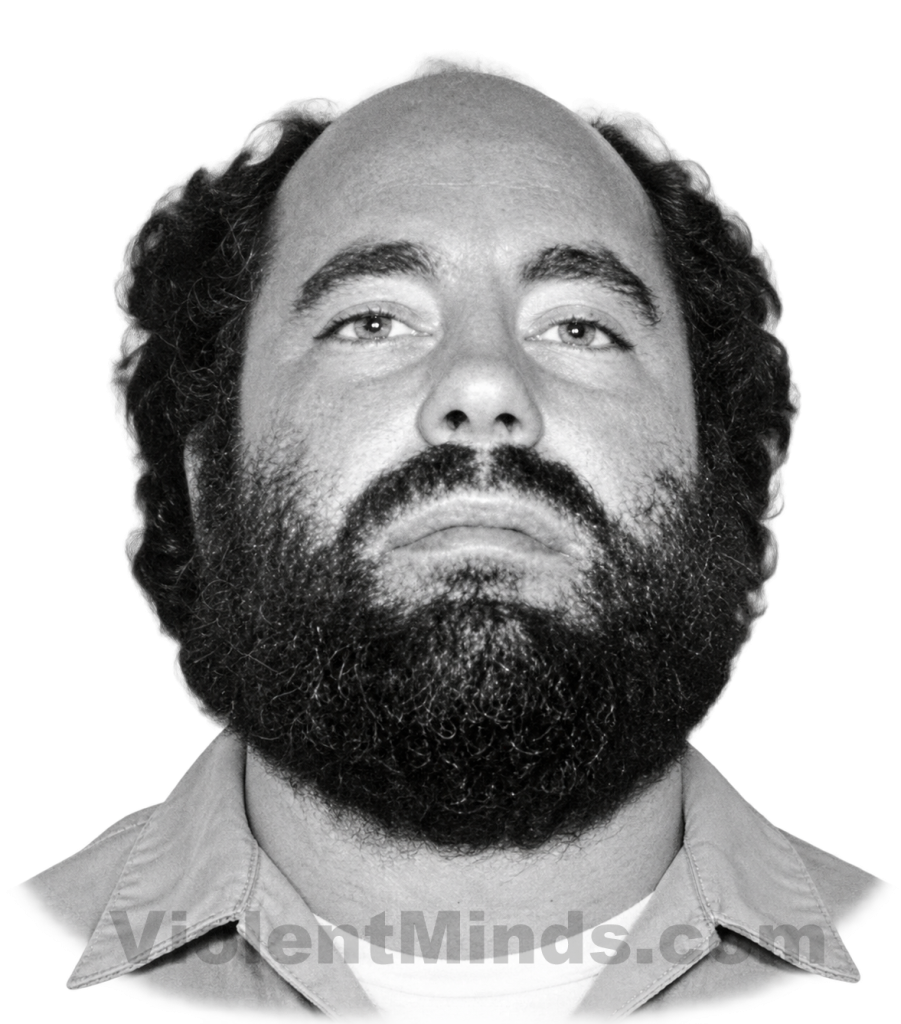
Leonard Thomas Lake was one of two men at the center of a series of kidnappings, robberies, and murders connected to a remote property near Wilseyville, California. Along with Charles Ng, Lake abducted people from Northern California between 1984 and 1985. Investigators later found human remains, victims’ belongings, weapons, and a concealed bunker on the property.
The case came to light after Lake and Ng were stopped in June 1985 during a shoplifting incident. Lake was arrested on weapons charges and swallowed cyanide while in police custody. He died several days later, before he could be tried. Ng fled to Canada, was later extradited, and was convicted in 1999 of 11 murders. The full number of victims connected to the Wilseyville property remains uncertain; investigators have long considered that more people may have been killed than those established at Ng’s trial.
Early Life and Background
Childhood and Military Service
Lake was born in San Francisco in 1945. Public accounts describe an unsettled family life and a childhood shaped by his parents’ separation. He later served in the United States Marine Corps, including a period in Vietnam. His military service and psychological history have been described differently across sources, so dramatic claims about his diagnosis or conduct should be treated cautiously unless tied to reliable records.
Lake was intelligent, mechanically capable, and interested in survivalism and firearms. He also developed violent fantasies involving the captivity and control of women. Evidence presented in Ng’s trial described Lake’s interest in building a bunker and in keeping women captive there. The evidence also included testimony about his controlling behavior and the way he presented his ideas to others.
The Survivalist Bunker
Lake acquired property near Wilseyville, in Calaveras County, and constructed a bunker with hidden rooms. Investigators later found a small locked room that could only be opened from the outside. It contained a narrow bed, a bucket, toilet paper, and a lamp. The bunker and its concealed spaces became significant evidence in the investigation because they were consistent with captivity and confinement.
The structure was not merely a survival shelter. Evidence at trial connected the property and bunker to victims, stolen possessions, and the broader crimes. Lake’s plans for the bunker had been discussed with people who knew him, but the full purpose of the site only became clear after the 1985 search.
Relationship with Charles Ng
Meeting and Partnership
Lake and Ng met in Northern California in the early 1980s. Ng was born in Hong Kong and had moved to the United States as a young adult. He had served in the U.S. Marine Corps and later faced military and criminal proceedings, including an escape from custody. Lake and Ng eventually lived and worked together, and evidence placed both men at the center of the Wilseyville crimes.
Their relationship was examined extensively at Ng’s trial. The prosecution argued that the two men worked together in abductions, robberies, and killings. Ng’s defense portrayed Lake as the dominant partner and argued that Lake had committed some crimes without Ng’s knowledge or participation. The jury nevertheless found Ng guilty of 11 murders.
A Pattern of Robbery and Control
Victims were sometimes lured or approached through practical pretexts, such as selling a car or offering a job. Investigators found evidence that the men used victims’ vehicles, credit cards, bank accounts, and identities. In some cases, victims were forced to contact employers or financial institutions, helping the men conceal disappearances and obtain money or property.
The crimes combined financial motives with sexual violence and coercive control. The trial record included videotapes and testimony describing women held against their will. The evidence showed a deliberate effort to isolate victims, intimidate them, and make escape difficult.
The Victims and Disappearances
The Dubs Family
In July 1984, Harvey Dubs, his wife Deborah, and their 16-month-old son Sean disappeared from their San Francisco home. Harvey had arranged to meet someone who responded to an advertisement for video equipment. The family’s disappearance initially appeared unrelated to other missing-person cases.
Investigators later found property connected to the Dubs family at Lake’s Wilseyville residence. Witnesses also placed Ng at the family’s apartment after their disappearance. Evidence presented at trial connected Ng to the family’s abduction and deaths. The Dubs case became one of the central parts of the prosecution against him.
Paul Cosner
Paul Cosner disappeared in November 1984 after arranging to sell his Honda. His car later became part of the chain of events that led police to Lake. When Lake and Ng were stopped in South San Francisco in June 1985, they were using a vehicle associated with Cosner.
Police found the vehicle and began tracing its ownership. That investigation helped connect the men to missing people and to Lake’s property. Ng was charged in Cosner’s murder, but the jury did not reach a verdict on that count. The case illustrates the distinction between a disappearance investigators connected to the pair and a murder conviction returned by a jury.
Clifford Peranteau and Jeffrey Gerald
Clifford Peranteau and Jeffrey Gerald both worked with Ng at a moving company. Each disappeared after being told about a possible job or moving opportunity. After Peranteau vanished, a letter purportedly written by him told his employer that he had moved away. Investigators later determined that the letter had been typed on a typewriter found at the Wilseyville property.
Police found items belonging to the men at locations connected to Lake and Ng. In Ng’s later statements to a fellow inmate, he described involvement in their deaths. The jury convicted him of both murders. Their cases helped establish that the disappearances were not isolated incidents but part of a broader pattern involving the Wilseyville property.
Michael Carroll and Kathleen Allen
Michael Carroll and Kathleen Allen disappeared in April 1985. Allen left work after receiving information that Carroll was in trouble and that someone would take her to him. Investigators later found evidence that Allen had been held captive and forced to provide information about Carroll’s finances and contacts.
A videotape recovered from the Wilseyville property showed Allen restrained and threatened. The recording also showed the men attempting to force her to cooperate in concealing Carroll’s disappearance and accessing financial resources. Ng was convicted of the murders of both Allen and Carroll.
Lonnie Bond, Brenda O’Connor, Their Infant Son, and Scott Stapley
Lonnie Bond Sr., his fiancée Brenda O’Connor, and their infant son, Lonnie Bond Jr., lived in a house next to Lake’s Wilseyville property. Their friend Robin Scott Stapley also disappeared. The group’s disappearance became connected to Lake and Ng through witness accounts, the victims’ belongings, and physical evidence recovered near the property.
Investigators found the bodies of Bond and Stapley buried near the property. Evidence from the case also established the deaths of O’Connor and the infant. Ng was convicted of murdering Bond Sr., Bond Jr., O’Connor, and Stapley. The loss of an entire family and their friend underscored the scope of the violence associated with the property.
Discovery and Investigation
The Shoplifting Stop
On June 2, 1985, Lake and Ng were at a lumber store in South San Francisco. Ng was suspected of taking a vise without paying. As a store employee and a reserve police officer investigated, Ng walked away. Lake remained and spoke with police.
Officers searched a vehicle connected to the men and found a firearm with a silencer, along with property linked to missing people. Lake gave police a false identity and was arrested on weapons charges. At the police station, he ingested cyanide. He was taken to hospital but died several days later. Before his death, he left a note to a person close to him.
The Wilseyville Search
After Lake’s arrest, investigators traced the vehicle and other evidence to the Wilseyville property. They obtained a search warrant and began a large-scale investigation involving multiple agencies. The search lasted weeks and uncovered thousands of bone and tooth fragments, items belonging to missing people, weapons, and evidence from the bunker.
Forensic anthropologists determined that the recovered fragments represented at least four adults, one child, and one infant. Many fragments had been burned. The condition of the remains and the difficulty of identifying them meant that investigators could not immediately determine every victim’s identity or the full number of people killed.
Ng’s Flight and Extradition
Ng fled to Canada after Lake’s arrest. He was arrested there in July 1985 after a shoplifting incident and was later held in connection with weapons offenses. His return to California took years because of legal proceedings over extradition. He was ultimately extradited in 1991 to face charges in California.
The delay between the discovery of the crimes and Ng’s trial was driven by extensive legal proceedings, including extradition litigation, pretrial motions, a change of venue, and a competency hearing. The prosecution became one of the most lengthy and expensive murder cases in California history.
Trial and Conviction
The Prosecution’s Case
Ng’s trial began in 1998 in Orange County after the case was moved from Northern California. Prosecutors presented evidence linking him to victims through property, witness identifications, forensic findings, videotapes, and testimony from people who had spoken with him after his arrest in Canada. They argued that Ng participated with Lake in the abductions, robberies, and murders.
The prosecution also relied on the evidence recovered at Wilseyville: human remains, victims’ belongings, the bunker, weapons, and documents. The material established a connection between the missing people and the property, while testimony helped show Ng’s role in the crimes.
The Defense and Ng’s Testimony
Ng’s defense argued that Lake was the dominant offender and that Lake had committed some killings without Ng’s participation. Ng testified that he believed Lake’s plans involving women were part of a sexual fantasy and claimed he did not know that Lake intended to kill. He denied responsibility for some of the charged crimes while acknowledging involvement in other conduct.
The jury considered the defense’s account alongside evidence that Ng had participated in abductions, helped conceal crimes, possessed victims’ property, and made statements about the killings. The defense did not persuade jurors that Ng was innocent of the murder counts on which they returned verdicts.
The Verdict
On February 24, 1999, the jury convicted Ng of 11 counts of first-degree murder. The convictions involved six men, three women, and two male infants. Jurors found a multiple-murder special circumstance and returned a death sentence. A separate count involving Paul Cosner ended without a verdict after jurors could not reach unanimity.
Ng’s conviction established his responsibility for the 11 murders named in the verdict. Lake, by contrast, died before trial and was never convicted of murder. The trial record presented extensive evidence of Lake’s role, but statements about Lake’s guilt should be distinguished from a conviction that never occurred.
Psychological Profile and Motives
Ideology, Fantasy, and Control
Evidence at trial described Lake’s fantasies about survivalism, captivity, and the control of women. He built a concealed bunker and discussed the idea of keeping women hostage. Videotapes and other evidence recovered at the property supported the prosecution’s account that the crimes involved planned confinement and coercion rather than spontaneous encounters.
The crimes also involved material gain. Investigators and prosecutors described the use of victims’ vehicles, identities, bank information, and personal property. Financial exploitation and sexual violence operated together in the case; reducing the motive to only one dimension would leave out important evidence.
The Limits of Retrospective Profiling
Lake is often assigned psychological labels in popular accounts. A responsible profile should distinguish clinical diagnoses documented in reliable records from speculative descriptions based on his crimes. The evidence supports behavioral observations—planning, deception, coercive control, and the use of a concealed space – but those observations do not substitute for a formal clinical assessment.
It is also important not to treat survivalist beliefs as a cause of violence. The relevant evidence is not that Lake prepared for emergencies, but that he used a property and bunker in connection with abductions, confinement, and murder. The crimes resulted from his actions and those of his accomplice, not from survivalism in itself.
Unidentified Victims and Cold-Case Work
For decades, some remains recovered from the Wilseyville investigation remained unidentified. In January 2025, the Calaveras County Cold Case Task Force announced that remains found in 1985 had been identified as Reginald “Reggie” Frisby. Investigators said Frisby had not previously been considered a possible victim in the case and that the circumstances of his death were still being examined.
The identification showed how modern DNA analysis and forensic investigative genetic genealogy can give a name back to someone who had remained unidentified for decades. It also demonstrated that the investigation is not simply a closed historical case: authorities continue to review evidence and determine whether other remains can be identified and how each person died.
Investigators have estimated that the number of victims connected to the property may exceed the 11 murders Ng was convicted of, but the total remains uncertain. Different figures have circulated in news and popular accounts. Any estimate should be described as an investigative possibility, not a confirmed victim count.
Legacy and Conclusion
A Case Exposed by Chance
The Wilseyville crimes might have remained hidden longer if Lake and Ng had not been stopped during the lumber-store incident. The vehicle, weapon, false identity, and subsequent search led investigators from a suspected shoplifting case to missing people and a remote property containing evidence of multiple killings.
The case also showed the value of connecting missing-person investigations across jurisdictions. Victims had disappeared from different communities and under different circumstances. The links emerged through vehicle records, stolen property, witness accounts, forensic evidence, and the discoveries at Wilseyville.
Remembering the Victims
Coverage of Lake and Ng has often centered on the bunker, the killers’ fantasies, and the shocking discovery of remains. The victims were people with families, friends, work, and plans of their own. Some were identified only through years of investigative work, and others may remain unidentified.
The 2025 identification of Reginald Frisby underscores the importance of continuing that work. Identifying victims restores their names to the record and gives families answers that may have been unavailable for decades.
Leonard Lake was never tried or convicted for murder because he died in custody before trial. Charles Ng was convicted of 11 murders and sentenced to death. The broader scope of the Wilseyville killings remains under investigation, and the most accurate account separates the established court findings from the still-unresolved questions.
FOR READERS FASCINATED BY CRIMINAL MINDS
From the creators of Violent Minds comes Murder.net - a psychological cyber-thriller about control, fear, and obsession, where a killer streams his murders online to paying subscribers. How far would you go to stop a monster?
Get The Book
