Luis Alfredo Garavito Cubillos – Colombian Serial Killer
Introduction
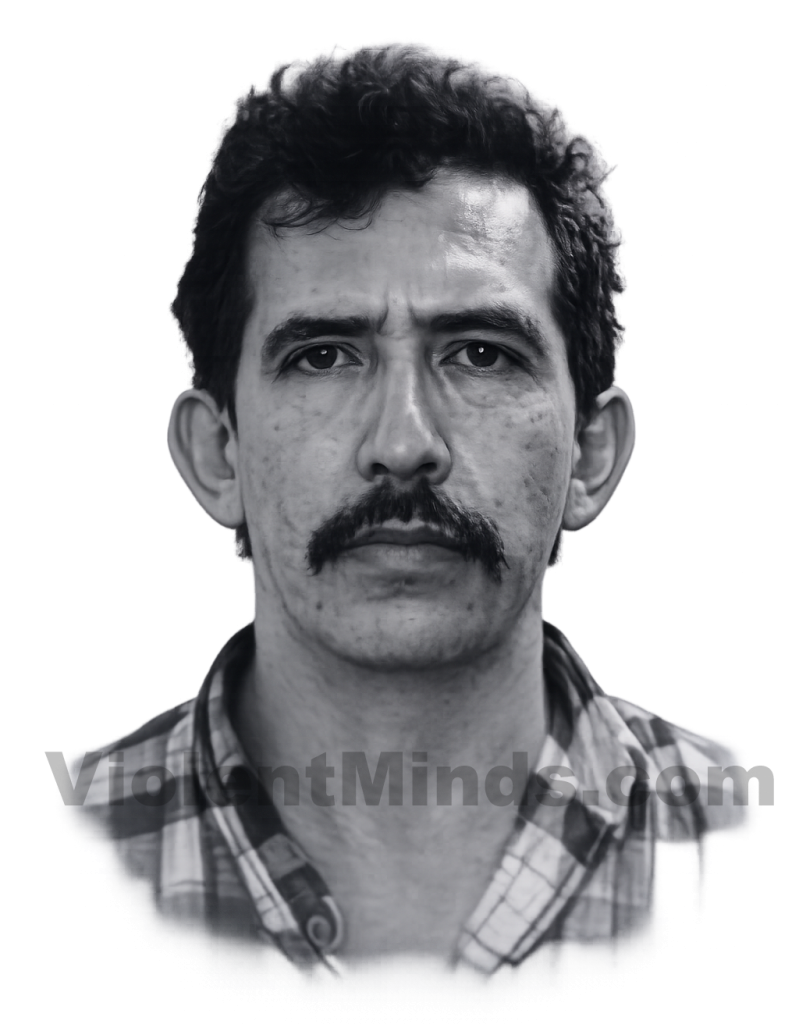
Luis Alfredo Garavito Cubillos (1957–2023) was a Colombian serial killer and child rapist widely regarded as one of the most prolific serial murderers in modern history. Nicknamed “La Bestia” (“The Beast”) and “Tribilín” (“Goofy”), he confessed to sexually assaulting, torturing, and murdering scores of boys across Colombia during the 1990s, with confirmed victims well over one hundred and some estimates suggesting several hundred.
He primarily targeted poor, vulnerable boys – often street children or the sons of market vendors – between roughly 6 and 16 years old. His crimes were marked by extreme sexual sadism, ritualized torture, and post-mortem mutilation, placing him firmly in the category of sexually motivated, psychopathic child killer rather than psychotic or insanity‑driven offender.
Early Life and Background
Garavito was born on January 25, 1957, in Génova, Quindío, Colombia, the eldest of seven children in a poor family. His childhood environment combined poverty, chronic violence, and alleged sexual abuse. He later reported being beaten by his father and sexually assaulted by neighbors on multiple occasions, accounts that were supported by people who knew the family.
He had limited formal education and left school early. Accounts describe a volatile, unstable youth with early behavioral problems and alcohol abuse, including cruelty to animals and sexualized behavior toward children. As an adult he drifted through low‑status jobs – shop assistant, street vendor, farm worker, itinerant laborer – frequently clashing with colleagues and superiors, and increasingly relying on alcohol.
Although he formed some relationships with adult women and expressed a wish to start a family, he reported erectile difficulties with women and developed a compulsive sexual interest in children, particularly prepubescent and early adolescent boys.
Victim Profile and Hunting Ground
Garavito’s victims were overwhelmingly:
- Boys and young male adolescents, typically around 8–16 years old.
- From poor, marginalized backgrounds: street vendors, homeless children, or kids whose parents worked long hours.
- Alone in public spaces – market areas, bus terminals, roadsides, or near schools.
Operating mainly during the 1990s, he roamed large areas of Colombia, moving through numerous towns and departments as a transient worker or drifter. The country’s broader context – civil conflict, high violence, and weak coordination between local authorities – made it easier for him to kill in multiple jurisdictions without immediate linkage of cases.
Many boys disappeared without swift investigation, in part because they came from families with little power or visibility, which amplified his access to “unprotected” victims.
Modus Operandi
Garavito’s approach to luring and killing was organized, repetitive, and sadistically elaborated.
Luring and Control
He commonly used:
- Disguises and roles: posing as a priest, teacher, charity worker, elderly man, or job recruiter.
- Offers of work, money, food, or small gifts to gain boys’ trust.
- Friendly conversation, alcohol, or the promise of adventure to lead victims away from populated areas.
After engaging a child in a public place, he would walk them to isolated fields, wooded areas, or roadside patches of land, sometimes over long distances, ensuring they were far from witnesses.
Assault and Torture
Once isolated, Garavito typically:
- Bound the victim’s hands, often blindfolding or restraining them.
- Raped and sexually assaulted the child, frequently prolonging the ordeal.
- Subjected victims to severe torture – beatings, stabbing or cutting, sometimes mutilation of genitals or other body parts.
- Ultimately killed by stabbing, slashing the throat, or similar methods, with bodies often left partially or fully nude.
Forensic and investigative accounts describe evidence of prolonged suffering, bite marks, and ritualistic mutilation on many bodies, indicating intense sexual sadism. There are reports that he sometimes collected “trophies,” such as personal items or even body parts, and kept written records of his crimes in notebooks or tally systems.
Routines and Evasion
Garavito drank heavily before and during his crimes, using alcohol to disinhibit himself. He constantly changed locations, disguises, and claimed identities, which combined with Colombia’s fragmented policing and the chaotic environment of the 1990s allowed him to evade detection for years.
Discovery, Investigation, and Arrest
Throughout the early and mid‑1990s, Colombian authorities noticed an alarming pattern: large numbers of boys went missing or were found dead with signs of sexual assault and mutilation, often in clusters near roads or small towns. In 1997, the discovery of a mass grave containing the bodies of dozens of boys near Pereira drew national attention and intensified the search for a single perpetrator.
The investigation involved:
- Linking scattered cases by victim age, modus operandi, and forensic similarities.
- Analyzing crime scenes where multiple bodies were recovered, including consistent signs of binding, sexual assault, and throat‑slashing.
- Tracing suspicious individuals who had passed through multiple affected towns.
Garavito’s eventual downfall came in 1999 when he attempted to assault a boy who managed to escape or whose case drew close scrutiny, leading to his detention on charges of attempted sexual assault. During subsequent questioning and investigation, evidence – physical items, witness statements, and links to murder sites – connected him to a series of killings.
Faced with mounting evidence, Garavito eventually confessed. He provided detailed information about numerous murders, drawing maps and indicating locations where he had left bodies, which helped investigators recover remains and tie unsolved cases to his crimes.
Victim Count and Scope of Crimes
Exact numbers vary, and in cases like Garavito’s, absolute certainty is impossible. Still, all credible sources agree his victim count is extraordinarily high.
- Garavito himself confessed to raping and murdering at least 140 boys in multiple Colombian departments.
- Investigators ultimately linked him to more than 170–190 victims, with one widely cited figure being 189 murdered boys.
- Some estimates, based on missing children, unconfirmed cases, and his own statements, suggest that the true number could exceed 300.
Many of these children were never formally identified or had families with limited ability to pursue legal action or public attention. This combination of massive victimization and social invisibility is part of what makes his case particularly devastating.
Prosecution, Sentencing, and Death
Garavito faced numerous charges, including aggravated homicide, rape, and kidnapping of minors across multiple jurisdictions. Because Colombian law at the time capped sentences and required concurrency rather than strict accumulation, the legal outcome reveals a striking gap between symbolic punishment and practical incarceration.
Key points:
- Initial sentencing totals – calculated by adding penalties for each murder – reached into the hundreds or even over 1,800 years in prison.
- Colombian law limited actual imprisonment to far lower maximums (often around 30–40 years), and his cooperation and guilty pleas led to sentence reductions.
- He was ultimately serving a capped sentence – generally reported around 40 years – despite the theoretical multi‑century total.
Public outrage was intense, with many Colombians feeling the legal system was incapable of delivering punishment proportionate to his crimes. Debates arose over justice, rehabilitation, and whether someone responsible for such extreme, repeated sadistic murders should ever be considered for early release.
Garavito developed serious health problems while incarcerated, including cancer of an eye and leukemia. He died in a hospital in Valledupar, Colombia, on October 12, 2023, while still serving his sentence. His death ended speculation about potential parole or reduced-security conditions, but many families of his victims felt that neither his imprisonment nor his death could balance the magnitude of the harm done.
Psychological and Criminological Profile
Although formal, detailed psychiatric evaluations are not widely published, multiple forensic, academic, and media analyses converge on a profile marked by severe sexual sadism and psychopathy.
Core traits and Diagnoses
Reports from forensic experts and case studies describe:
- Antisocial Personality Disorder (ASPD) features: chronic rule‑breaking, deceit, impulsivity, aggression, and absence of genuine remorse.
- Psychopathic traits: superficial charm, manipulativeness, callousness, shallow affect, and instrumental use of others.
- Sexual sadism: deriving sexual arousal from the suffering, torture, and humiliation of victims, reflected in the prolonged torture and mutilation at his crime scenes.
- Pedophilic disorder focused on boys, with a strong preference for prepubescent and early adolescent males.
Interviews and analyses suggest that he displayed little authentic empathy for his victims, instead focusing on his own impulses, grievances, and perceived victimhood. His detailed recollection of crimes and the maintenance of notes or symbolic tallies point to a compulsive, trophy‑oriented mindset that treated murders as achievements.
Role of Childhood Trauma
Garavito’s history of severe physical abuse and alleged sexual victimization in childhood likely contributed to his later pathology, particularly the development of deviant sexual interests and distorted power dynamics. However, criminological and forensic psychology perspectives emphasize that trauma alone does not “create” a serial killer; most abused children do not become violent offenders. In Garavito’s case, early trauma appears to have interacted with innate or emerging antisocial traits, sexual deviance, and a context of social instability to produce an extreme outcome.
Psychosis vs Psychopathy
Some accounts note that Garavito reported symptoms suggestive of paranoia or psychotic episodes in adulthood. Even if these episodes occurred, his long, organized pattern of luring, sexually torturing, and killing children across multiple regions is much more consistent with psychopathic, sexually sadistic serial homicide than with disorganized psychotic violence. He planned, traveled, used disguises, adjusted his methods to avoid detection, and maintained functional relationships and work – behaviors that indicate significant organized control and instrumental intent rather than continuous, florid psychosis driving his actions.
In this sense, Garavito represents the archetype of the predatory, sexually sadistic child killer – rooted in personality pathology and paraphilic drives – not a case of violence primarily caused by schizophrenia or another psychotic disorder.
FOR READERS FASCINATED BY CRIMINAL MINDS
From the creators of Violent Minds comes Murder.net - a psychological cyber-thriller about control, fear, and obsession, where a killer streams his murders online to paying subscribers. How far would you go to stop a monster?
Get The Book
