Benjamin Nathaniel Smith – Independence Day Weekend Shootings
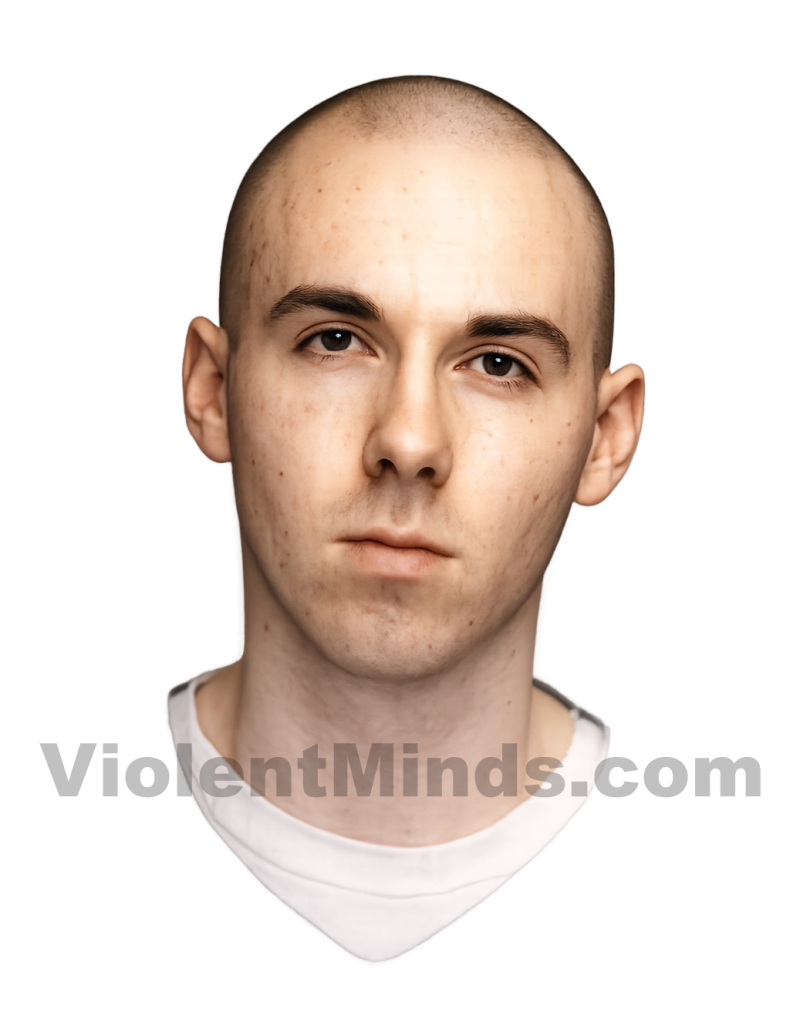
Introduction
Benjamin Nathaniel Smith was a 21‑year‑old white supremacist and disciple of the World Church of the Creator who carried out a three‑day, racist shooting spree over the 1999 Independence Day weekend across Illinois and Indiana. He killed two men – Ricky Byrdsong and Won‑Joon Yoon – and wounded nine others, targeting Black, Jewish, and Asian victims before dying by suicide during a police pursuit.
Early life and background
Smith was born March 22, 1978, and raised in Wilmette, an affluent suburb of Chicago, in what was generally described as a stable, professional family; his father was a doctor, his mother a real‑estate agent and trustee, and he had two younger brothers. He attended New Trier Township High School in Winnetka, one of the top public schools in Illinois, but was already engaging in confrontational behavior—at one point accosting a Skokie police officer and later pleading guilty to two misdemeanor battery counts, which led to his transfer to a high school in Kenosha, Wisconsin, for his senior year.
After high school, Smith enrolled at the University of Illinois at Urbana–Champaign, initially majoring in agriculture, then later studied criminal justice at Indiana University Bloomington after leaving Illinois under pressure from campus authorities. At both universities he became increasingly vocal about racist beliefs, distributing white nationalist leaflets and writing inflammatory material for campus outlets, while clashing with administrators over what he framed as “free speech” and bias against his views.
Criminal history
Before the 1999 spree, Smith’s official record included the Skokie battery case and campus disciplinary problems, not prior violent felonies. At University of Illinois he was reported for peeking into dorm rooms and possessing weapons; facing a disciplinary hearing and likely expulsion, he withdrew in 1998 after college officials contacted his parents and he agreed never to return.
At Indiana University he escalated his activism, passing out hate‑filled fliers targeting Jews, Black people, and Asians, and penning a manifesto‑style letter to the Indiana Daily Student complaining that the university was denying him free speech out of “bias.” He had media exposure as a campus extremist in late 1998, giving interviews in which he calmly articulated white supremacist ideas, further cementing his public identity around racist ideology.
Spree killings
Smith was a devoted follower of the World Church of the Creator (later the Creativity Movement), a neo‑Nazi organization led by Matt Hale that preached a “Racial Holy War” and dehumanized Jews and non‑white people as “mud races.” Two days after Hale was denied a law license in Illinois, a symbolic defeat for the group, Smith loaded his light blue Ford Taurus with guns, ammunition, and cash and began his shooting rampage.
July 2–3, 1999: Chicago and suburbs
On the evening of Friday, July 2, Smith drove into the heavily Orthodox Jewish West Rogers Park neighborhood of Chicago and carried out drive‑by shootings, wounding nine Orthodox Jews walking to and from synagogue. Shortly afterward in nearby Skokie, he pulled up on former Northwestern University basketball coach Ricky Byrdsong, an African‑American man jogging with two of his children, and shot him multiple times in the back, killing him in front of his kids.
Over the next day he moved south through Illinois, firing at multiple Black victims: in Springfield he shot a 31‑year‑old Black man and fired at two others; in Decatur he wounded Black pastor Stephen Anderson as Anderson waited to cross the street; and near the University of Illinois campus he shot Taiwanese graduate student Steven Kuo, seriously injuring him.
July 4, 1999: Bloomington and flight
On Sunday, July 4, Smith drove to Bloomington, Indiana – his former college town – where he shot 26‑year‑old Korean graduate student Won‑Joon Yoon twice in the back as Yoon walked toward the Korean United Methodist Church, killing him. That same day he shot at but missed at least nine other people in the region, continuing his pattern of targeting visible minority pedestrians and motorists.
System failure
Smith’s trajectory shows multiple points where authorities and institutions recognized his extremism but did not fully anticipate or disrupt his progression to lethal violence. At both universities, his racist activism triggered disciplinary processes and media attention, yet the response ultimately consisted of pushing him off campus (withdrawal and agreements not to return) rather than sustained monitoring, deradicalization efforts, or legal action beyond campus rules.
Law enforcement knew of his earlier battery conviction and his association with an explicitly violent white supremacist group that preached “Racial Holy War,” but at the time his activities were largely treated as protected speech plus low‑level offenses. In retrospect, the combination of escalating propaganda, open advocacy of violence, group affiliation, weapons possession, and cross‑state mobility represented a high‑risk constellation that contemporary threat‑assessment frameworks might flag more forcefully than those of the late 1990s.
Psychological profile
Contemporaneous interviews and later analyses portray Smith as an ideologically driven spree killer whose violence was explicitly shaped by white supremacist doctrine. Journalist Lisa Sorg, who interviewed him before the shootings, described him as calm, with a flat affect and “dead eyes,” and noted that he was even more openly aggressive and extreme in his rhetoric than Matt Hale, casually suggesting violence for supremacist goals.
He appeared to see himself as a martyr and “soldier” for his race, expressing fear for the survival of whites as a group more than concern for his own life, which he treated as expendable in service of the cause. His comments indicated that he had fully internalized a dehumanized view of Jews, Black people, and Asians, framing them as enemies or invaders rather than fellow citizens, which psychologically eased the path to shooting strangers in everyday settings.
Behaviorally, his spree shows:
- Mission‑oriented targeting: He chose victims solely based on race and religion – Jews walking to synagogue, a Black father jogging, Asian students and churchgoers – without personal acquaintance.
- Indifference to bystanders: He fired in residential areas, in front of children, and at groups, indicating little concern for collateral victims or witnesses.
- Escalation from speech to violence: After years of propaganda distribution, campus confrontations, and media interviews, he crossed into action once a symbolic trigger (Hale’s law‑license denial) aligned with his internalized war narrative.
While there is no detailed clinical assessment on record, his presentation fits an ideologically driven extremist with rigid, dehumanizing beliefs and probable narcissistic and identity‑based investment in being part of a “vanguard” for his race, rather than a primarily psychopathic thrill killer.
Aftermath and legacy
During a low‑speed chase on July 4, 1999, after he carjacked a woman’s van near Salem, Illinois, Smith shot himself in the chin while fleeing, crashed into a metal post, then shot himself twice more – once in the chest and once in the head/heart – as officers approached, and was pronounced dead soon after at a hospital. Investigators recovered his two handguns and cash, and ballistics linked the weapons to the shootings in Illinois and Indiana.
The attacks prompted civil suits and broader scrutiny of the World Church of the Creator, leading to the landmark case Anderson v. Hale, in which victims and families sued the group and its leaders for inciting and facilitating the violence. Smith’s rampage is now cited in discussions of lone‑actor white supremacist terrorism and hate‑crime prevention, illustrating how campus‑based radicalization and extremist propaganda can transition into mobile, multi‑site shootings over a very short time window.
FOR READERS FASCINATED BY CRIMINAL MINDS
From the creators of Violent Minds comes Murder.net - a psychological cyber-thriller about control, fear, and obsession, where a killer streams his murders online to paying subscribers. How far would you go to stop a monster?
Get The Book
