Charles Raymond Starkweather – Spree Killer
Introduction
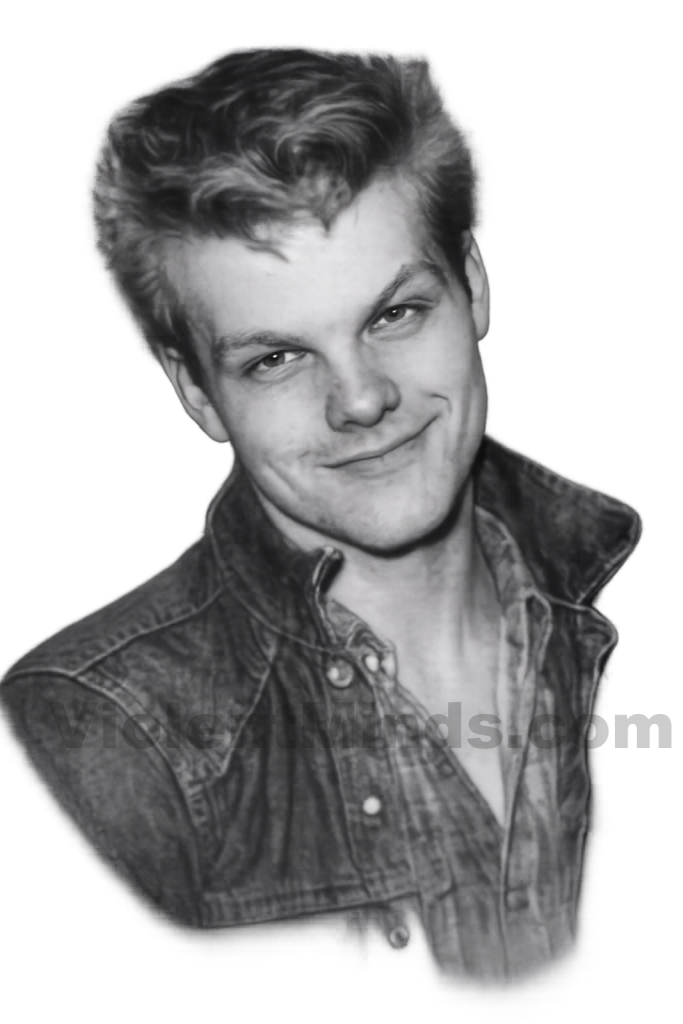
Charles Raymond Starkweather (1938–1959) was a 19‑year‑old spree killer who murdered 11 people across Nebraska and Wyoming between late 1957 and January 1958, in a week‑long rural rampage that terrorized both states. His crimes, often committed alongside 14‑year‑old girlfriend Caril Ann Fugate, became an early prototype of the alienated teenage spree killer and inspired decades of “killer couple” pop‑culture narratives.
Early life and developmental factors
Starkweather was born in Lincoln, Nebraska, into a working‑class family, the third of seven children, and grew up with bowed legs, a stutter, and severe myopia that went uncorrected until mid‑adolescence. These physical differences made him a frequent target of bullying at school, fueling a deep inferiority complex and resentment toward peers who were more socially and physically confident.
Teachers and classmates perceived him as slow and unmotivated, but later commentary notes that his unrecognized vision problems likely contributed to academic failure and reinforced the narrative that he was “dumb” or incapable. As he grew physically stronger, he shifted from victim to aggressor – finding in physical education and fighting a way to reverse the power imbalance and “get even” with those who had humiliated him.
Personality structure
Retrospective assessments describe Starkweather as developing a paranoid, hostile view of the world, with a “hair‑trigger” temper and a longstanding pattern of antisocial behavior. He was later characterized by clinicians as having antisocial personality disorder and a paranoid outlook, consistent with chronic rule‑breaking, aggression, and the belief that others were out to wrong him.
Friends reported a stark split in his personality: he could be generous and fun with people he liked, yet brutally cruel and vindictive toward those he envied or resented, especially anyone he perceived as better looking, better dressed, or higher status. Over time, his anger broadened from specific bullies to society at large; he grew obsessed with guns and with James Dean’s rebel persona, modeling himself on an outlaw who lived by his own rules.
Identity, class resentment, and worldview
Several sources highlight intense class envy as central to Starkweather’s psychology: he felt trapped in poverty, destined for a life of low‑paid manual labor like his father, and deeply embittered toward the more affluent. In prison writings, he articulated a nihilistic philosophy that “dead people are all on the same level,” suggesting that killing, to him, equalized rich and poor and erased the status differences that tormented him.
He internalized the belief that his life course was fixed and hopeless, leading him to embrace crime as the only way to “break the cycle” and achieve power and excitement. This blend of class grievance, fatalism, and rebellion underpinned a worldview in which conventional morality had little weight compared to his desire to assert dominance and escape a despised future.
Relationship with Caril Ann Fugate
Starkweather began dating Fugate when he was 18–19 and she was 13–14, quickly becoming fixated on her as the one “bright spot” in his life and a symbol of something worth fighting – or killing for. Accounts indicate that she fit into his alienated worldview, reinforcing a shared “us against them” mentality and intensifying his belief that the outside world was hostile and untrustworthy.
Their dynamic during the spree remains controversial: Starkweather alternately cast her as an accomplice and minimized her role, while Fugate maintained that she was a terrified hostage who believed her family was still alive. From a behavioral perspective, evidence such as cut‑out newspaper photos of her murdered family found with them suggests she had at least some awareness of the killings, but the degree of coercion versus willing participation is still debated.
Pre‑offense stressors and triggers
By late 1957, Starkweather had dropped out of school, drifted through menial jobs, and felt increasingly trapped and angry about his socioeconomic position. He was fired from a garbage‑hauling job, fell behind on rent at his boarding house, and clashed with Fugate’s parents, who disapproved of the relationship and believed she might be pregnant.
He also quarrelled with his own father, a conflict that commentators argue intensified his sense of rejection and accelerated his turn toward crime and rebellion. Shortly thereafter he committed his first known homicide – the November 1957 robbery‑murder of gas‑station attendant Robert Colvert – discovering that he could kill, get away, and briefly enjoy the proceeds, which reinforced his belief that “crime paid.”
Victimology
Starkweather’s 11 known victims spanned age, class, and relationship categories, reflecting both expressive rage and instrumental motives.
- Robert Colvert, a young service‑station attendant shot after a dispute over credit, representing an early instance of lethal escalation over a minor frustration.
- Velda and Marion Bartlett and their 2‑year‑old daughter Betty Jean, Fugate’s mother, stepfather, and half‑sister, killed after they tried to bar him from Caril, symbolizing vengeance against familial authority and control.
- August Meyer, a 72‑year‑old family friend, shot at his rural home, and his dog, killed as Starkweather removed obstacles and witnesses in his path.
- Teenagers Robert Jensen and Carol King, who offered the pair a ride and were then kidnapped, Jensen shot and King killed after an attempted sexual assault, embodying both opportunism and envy toward “normal” youths.
- Wealthy couple C. Lauer and Clara Ward and their maid Lillian Fencl, killed in their upscale Lincoln home – victims who directly represented the affluent world he resented, whose possessions he then looted.
- Traveling salesman Merle Collison, shot as he slept in his car in Wyoming, primarily to obtain a different vehicle as the manhunt intensified.
The pattern shows a progression from personally meaningful targets (family, authority, class resentment) to utilitarian killings for vehicles and cover, as his survival on the run took precedence.
Modus operandi and behavioral patterns
Starkweather relied primarily on firearms but also used blunt force and stabbing, especially in emotionally charged scenes where rage and cruelty escalated beyond what was necessary to kill. He frequently eliminated animals, including dogs, to prevent detection, which also reflected a broadened capacity for instrumental cruelty toward any living thing that interfered with his goals.
He displayed both planning and impulsivity: he brought weapons, stole vehicles, and chose remote sites to kill or dispose of victims, yet many incidents were triggered by immediate frustrations – being denied credit, blocked from Caril, needing a new car. Enjoyment of the temporary “fruits” of crime (money, cars, status symbols) appears to have reinforced his behavior, feeding a short‑lived sense of power and success.
Psychological dynamics
Key psychological themes running through Starkweather’s life and spree include:
- Inferiority and overcompensation: Chronic humiliation over his appearance, speech, and academic struggles fostered deep shame, which he countered by cultivating a tough, rebellious image and using violence to assert superiority.
- Narcissistic injury and rage: Rejections by peers, employers, parents, and Fugate’s family fed a sense of being wronged, leading to an explosive, retaliatory stance where lethal violence became an acceptable response to insult or obstruction.
- Class envy and nihilism: His belief that life was stacked against him and that the rich looked down on him made prosperous victims like the Wards especially symbolically charged; killing them functioned as a brutal “leveling” of the hierarchy.
- Fusion with a partner: With Caril, he appeared to achieve a sense of belonging and justification- “something worth killing for” – which paradoxically intensified his urgency to act out violently rather than calming him.
These dynamics align with a young offender whose antisocial traits and distorted worldview were already entrenched, and who used the spree as a final, fatal assertion of control against a world he believed had treated him with contempt.
Risk factors and warning signs
Several risk‑relevant features were evident before the homicides:
- Early, intense bullying over physical disabilities and speech impediment.
- Hair‑trigger temper, frequent fights, and escalating aggression in adolescence.
- Academic failure and school disengagement without effective intervention, compounded by undiagnosed vision problems.
- Obsession with guns and outlaw imagery, especially identification with James Dean’s rebel persona.
- Emerging criminal behavior (robbery) and aggression toward family, leaving relatives afraid of him.
- Growing fixation on class injustice and fantasies of escaping poverty through crime.
While none of these alone predicts a spree, the combination within a youth already showing antisocial personality features created a volatile profile, especially when paired with a willing or dependent partner.
Classification
Criminologically, Starkweather is classified as a spree killer: he committed multiple murders in a short period, across multiple locations, without a significant cooling‑off interval, and largely in response to situational pressures and opportunities. Psychologically, his presentation is consistent with antisocial personality disorder, with prominent elements of paranoia, grievance, and class‑based resentment, rather than the more organized, fantasy‑driven pattern typical of sexual serial killers.
He was arrested near Douglas, Wyoming, on January 29, 1958, after a high‑speed chase; he surrendered when minor injuries from flying glass convinced him he had been seriously wounded. He was executed in Nebraska’s electric chair on June 25, 1959, while Fugate, convicted as an accomplice, was paroled after about 18 years, leaving ongoing debate about her true level of culpability.
FOR READERS FASCINATED BY CRIMINAL MINDS
From the creators of Violent Minds comes Murder.net - a psychological cyber-thriller about control, fear, and obsession, where a killer streams his murders online to paying subscribers. How far would you go to stop a monster?
Get The Book
