Dimitrios Pagourtzis – Santa Fe High School Shooter
Introduction
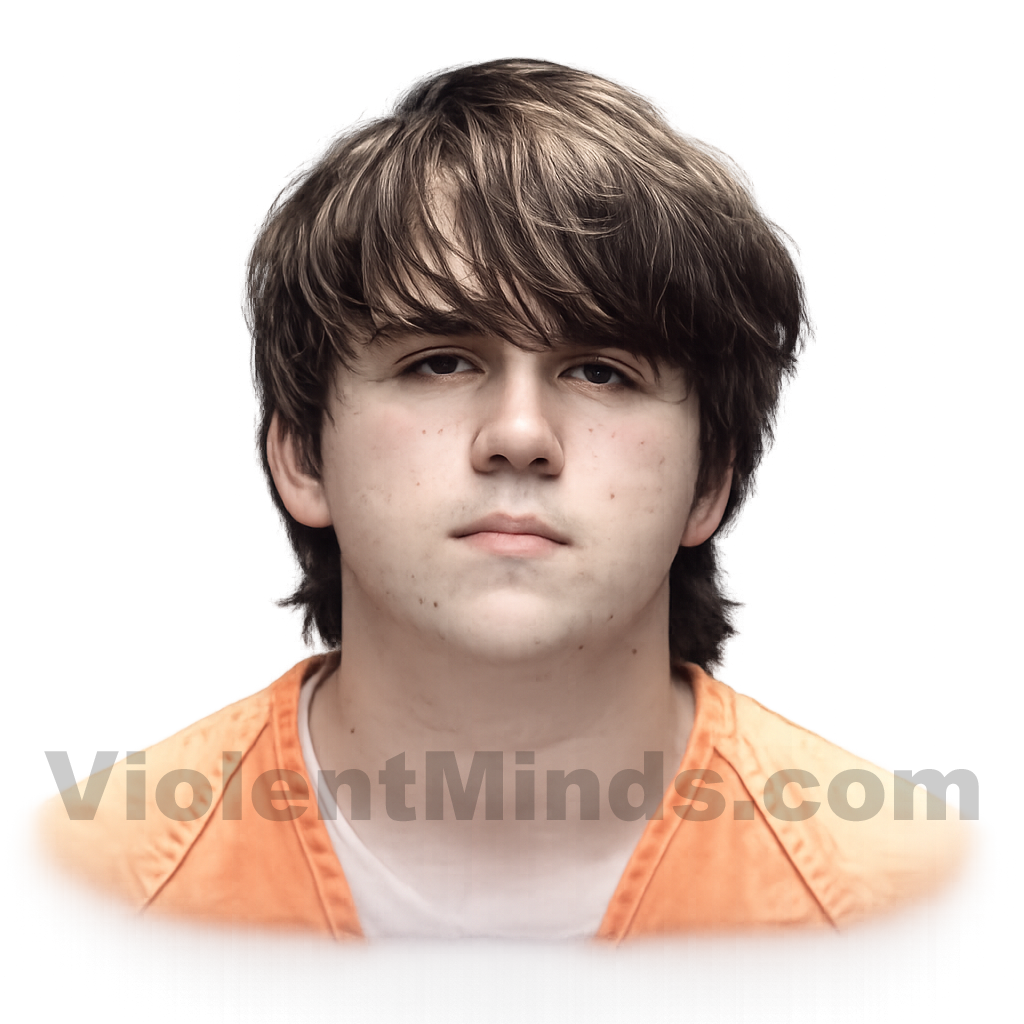
On May 18, 2018, 17-year-old Dimitrios Pagourtzis walked into Santa Fe High School, about 30 miles southeast of Houston, and turned a typical Friday morning into one of Texas’s deadliest school shootings. Armed with his father’s pump-action shotgun and a .38-caliber revolver, plus crude explosives, he killed 10 people – 8 students and 2 teachers – and wounded 13 others during a 30-minute attack that began in an art classroom. Unlike many school shooters, he surrendered to police and lived, but has since spent years in a state psychiatric hospital, repeatedly ruled incompetent to stand trial because of severe mental illness.
Early Life and Family Background
Dimitrios Pagourtzis was born in 2000 and grew up in Santa Fe, Texas, the son of a Greek immigrant father who owned a shipping company and a mother who worked in the area. The family lived in a single-story house on several acres, with a small farm atmosphere; neighbors recalled goats, animals, and a quiet boy who sometimes helped with chores. He played on youth football teams and later on the Santa Fe High School junior varsity football squad, where coaches described him as a solid but unremarkable player. He wore a trench coat and combat-style boots even in hot weather, a look some classmates associated with outsiders and goth culture, but he also had friends and was not widely seen as a total loner.
Teachers and peers said he could be polite and even funny at times, but also quiet and withdrawn. Classmates later told reporters that Pagourtzis had been bullied, particularly on the football team – teased about his appearance and clothing, mocked in the locker room – though others disputed how severe or constant the bullying really was. On the surface, he looked like a fairly typical small-town teenager with a mix of normal activities and quirks; nothing in his early years foreshadowed that he would one day open fire on his classmates.
Escalation and Warning Signs
In the months leading up to the shooting, subtle warning signs began to surface. On social media, Pagourtzis posted images that hinted at darker preoccupations: photos of a black trench coat adorned with a hammer-and-sickle pin, an iron cross, a rising sun, and a Cthulhu insignia, along with a “born to kill” patch and a shotgun shell emblem. He shared pictures of a T-shirt emblazoned with “Born To Kill” and images of a handgun and knife, signaling an emerging fascination with weapons and violent iconography.
Investigations and later civil trial testimony revealed that he kept journals and notes in which he described suicidal thoughts, homicidal fantasies, and plans to carry out an attack at school. In one entry, read aloud in a 2024 civil trial, he wrote about wanting to “make a show” and to kill as many people as possible, as well as about his interest in mass killers and the idea of leaving his mark. According to his family and some classmates, he had become more withdrawn in the year before the shooting, spending more time alone, playing video games, and retreating into his own world.
There were also interpersonal stressors. One victim’s mother later said her daughter had rebuffed Pagourtzis’s repeated romantic advances and publicly told him to stop harassing her; that girl was among the first killed in the art classroom. Other students recalled him talking about suicide and making dark jokes about school shootings. Yet, as with many such cases, the hints were scattered – some seen by peers, some by family – and never coalesced into a formal threat assessment or mental-health intervention.
Timeline of the Attack
On the morning of May 18, 2018, Pagourtzis left home carrying a shotgun and a .38-caliber revolver that investigators say belonged to his father, along with a black duffel bag and his trademark trench coat despite the warm weather. He arrived at Santa Fe High School shortly before first period.
Around 7:30–7:32 a.m., he entered the school’s fine arts hallway and walked into an art classroom, where students were starting their day. He shouted “Surprise!” according to survivors, then pulled out the shotgun and began firing at close range, quickly shooting several classmates and a beloved substitute teacher. He moved between Art Room 1 and adjacent Art Room 2, continuing to fire at students hiding under tables, in supply closets, and behind counters, reloading as he went.
As the attack unfolded, fire alarms sounded and students in other parts of the school began to evacuate, some believing it was a drill. Law enforcement officers from the Santa Fe Independent School District and local agencies responded within minutes, exchanging gunfire with Pagourtzis in the hallway outside the art rooms. Meanwhile, small, crude explosive devices – pipe bombs and pressure-cooker-style devices – were found in and around the school and along the roadside, though most failed to detonate or caused only minor damage.
The standoff inside the school lasted roughly 25–30 minutes. At about 8:02 a.m., Pagourtzis surrendered, telling officers he was done and laying down his weapons. He reportedly told police that he had spared some students he liked so he could “have his story told,” and that he had planned to kill himself but “didn’t have the courage” to do it. By the time the shooting stopped, 10 people were dead and 13 wounded, leaving Santa Fe reeling.
Psychological Autopsy
Because Pagourtzis survived and has been evaluated extensively, there is more clinical data on him than on many school shooters – but it is also more contested. Initial accounts painted him as a quiet, bullied kid who snapped; journal entries and psychiatric reports depict something more complex: a teenager with emerging severe mental illness, violent ideation, and a performative streak.
In 2019 and again in subsequent competency hearings, court-appointed psychiatrists diagnosed him with schizophrenia-spectrum or schizoaffective-type psychosis, citing hallucinations, delusions, disorganized thinking, and a deteriorating mental state after his arrest. One psychiatrist testified in 2024 that Pagourtzis believed voices were commanding him and that he suffered from paranoid delusions, including the belief that he was being controlled or monitored. He reportedly became increasingly withdrawn and bizarre in custody, at times smearing feces and speaking incoherently, leading judges to conclude that he could not rationally understand the charges against him or assist his defense.
At the same time, his pre-attack behavior suggests organized planning and a desire for notoriety. His journals, discussed in civil trials and media reports, show he fantasized about carrying out a shooting, studied previous attacks, and weighed different methods – all hallmarks of the “injustice collector” and fame-seeking patterns seen in other mass shooters. He wrote about wanting to “make a show,” about killing students and teachers, and about setting explosives to cause chaos and maximize impact. He also displayed narcissistic and grandiose elements, hinting that he wanted people to know who he was and what he had done.
The most plausible synthesis is that Pagourtzis combined significant underlying vulnerability – possibly a budding psychotic disorder and depression – with the now-familiar cocktail of grievance, fascination with violence, and access to weapons. Unlike someone like Eric Harris, whose writings reveal calculated psychopathy, Pagourtzis appears more like an angry, unstable teenager sliding into psychosis, who latched onto the school-shooter script as a way to express and crystallize his fragmented rage and identity. His post-arrest decompensation suggests that by the time of the attack, the line between fantasy and reality was already thin and continuing to erode.
Legal Status and System Failures
Pagourtzis was charged with capital murder and aggravated assault on a public servant in state court, but more than seven years later he has never stood trial. Multiple competency evaluations have found him incompetent to stand trial due to severe mental illness, and he has been committed to a maximum-security state psychiatric hospital in Vernon, Texas, for restoration treatment. In 2024 and again in 2025, judges ruled that he remained incompetent, and prosecutors acknowledged that he may never be tried if his condition does not sufficiently improve.
Civil litigation has focused on his parents, the school district, and others. In 2024, a civil jury considered whether his parents were negligent for allowing him access to firearms and for ignoring warning signs; jurors ultimately found the parents not liable, though the trial aired evidence about Dimitrios’s journals, past behavior, and family knowledge of his mental health. The case highlighted persistent gaps in how families, schools, and health systems handle teens showing signs of severe distress and obsession with violence.
From a systems perspective, the Santa Fe shooting exposed several familiar failures. Pagourtzis’s social media posts, clothing, and comments displayed dark themes and gun fascination; peers heard disturbing jokes and threats; at least some adults were aware of his struggles and isolation. Yet there was no coordinated threat assessment, no robust mental-health evaluation before the attack, and no restriction on his access to his father’s firearms. Once again, a teenager with visible warning signs managed to arm himself easily and attack a familiar, soft target.
Aftermath and Legacy
The Santa Fe High School shooting came less than three months after Parkland and deepened the national trauma around school shootings, especially in Texas. It prompted discussions about school hardening, armed staff, and mental-health services, but led to fewer sweeping legislative changes than some other high-profile attacks. The community built memorials and held vigils, and families have continued to push for accountability and reform through lawsuits and advocacy.
Pagourtzis sits at the intersection of several themes: the overlap of emerging psychosis and the school-shooter script, the impact of bullying and social humiliation, the role of access to family firearms, and the way systems respond when a surviving shooter is too mentally ill to stand trial. His case is still technically “open” in a legal sense, but the core narrative is already clear: a troubled teen, ignored warning signs, easy access to weapons, and a system now left to debate his fate in locked wards rather than a courtroom, while families live with losses that no verdict can repair.
FOR READERS FASCINATED BY CRIMINAL MINDS
From the creators of Violent Minds comes Murder.net - a psychological cyber-thriller about control, fear, and obsession, where a killer streams his murders online to paying subscribers. How far would you go to stop a monster?
Get The Book
